


Dental practices now use artificial intelligence in their day-to-day work. Microsoft Copilot, ChatGPT, Google Gemini, Grammarly, and free transcription AI apps are all tools that are integrated into email platforms, browsers, and operating systems. They make the staff move quicker, write more, and process information more effectively.
What most dental practices are unaware of is that the same tools would silently expose electronic protected health information (e-PHI) and lead to the generation of HIPAA violations, even when these tools are not subject to any hack, breach, or malicious intent.
This problem is rapidly spreading throughout dental offices and DSOs throughout the country with Legend Networking. Leadership is not aware of the existence of the risk in most cases.
How AI Is Being Used Inside Dental Offices Today
AI is not often exposed to intentional misuse. It tends to begin with convenience.
Patient notes can be pasted into ChatGPT or Google Gemini by dental staff members to become clearer, get Microsoft Copilot to summarize emails that contain patient information, or use Grammarly to refine messages containing PHI. Even dentists can utilize free transcription AI applications so that voice notes could be translated into a chart record without one noticing where the data are being handled.
On the part of the user, such actions are routine. Compliance wise, patient data can already be exiting the secure environment of the practice.
Legend Networking finds these tools being utilized regularly in the process of regular IT audits commonly without any authorization, paperwork, or safeguards implemented.
Everyday AI Convenience Creating Hidden Compliance Risks in Dental Practices
Why Free AI Tools Create HIPAA Compliance Risk
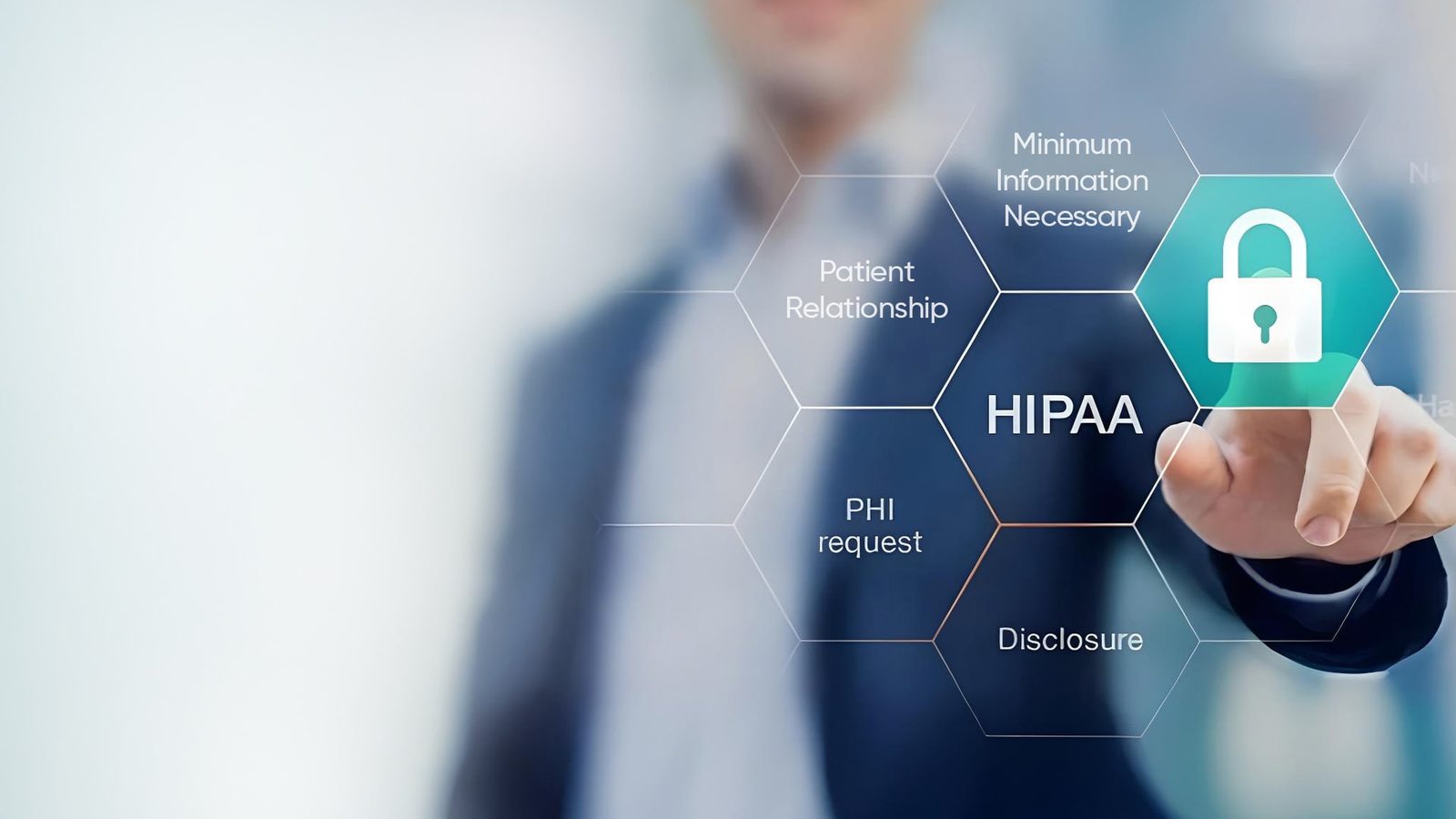
Majority of the consumer AI tools are incompatible with healthcare compliance. Even popular platforms are usually not offering Business Associate Agreements (BAAs), which are needed when the third parties work with e-PHI.
By inputting patient data into dental practice-consumer transcription AI tools, such as ChatGPT, Gemini, Copilot, or consumer transcription AI, the dental practice is giving up direct control of patient information. The policy of storage, retention, reuse and deletion is not usually clear or consistent with HIPAA standards.
HIPAA does not take intent into consideration. The very sharing of patient data with an unauthorized third party may be a breach in itself, although the information may not have been stolen or abused.
Why “Nothing Was Hacked” Doesn’t Matter Under HIPAA
Among the most frequently misused assumptions that the Legend Networking faces, there is an assumption that HIPAA violations can only be made following the cyberattack.
As a matter of fact, ransomware, hackers, and data theft are not necessary in the context of HIPAA violations. It is enough that it is disclosed improperly.
Even in case e-PHI is transferred through an unapproved AI tool, the regulators can consider that a failure in compliance. This may result in audits, reporting conditions, fines, as well as the loss of patient confidence without even one breach of the news head.
Improper Data Still Breaks HIPAA Rules
Why AI Risk Is Accelerating in 2026 and Beyond
The use of AI is outpacing dental policies. Currently, AI capabilities are integrated within browsers, email systems and operating systems. It is possible that Microsoft Copilot has been automatically switched on. AI assistants are browser-based and can be invoked without people noticing.
The younger employees tend to think that AI tools are safe to use, and the majority of dental practices did not provide the training regarding AI and HIPAA as a combination. This loophole results in shadow IT, where technology is applied without the knowledge of the leaders.
Legend Networking recognizes the use of shadows AI as one of the most rapidly expanding compliance risks in the dental setting.
How Legend Networking Helps Dental Practices Stay Compliant
Legend Networking will start with identifying the AI tools that are actually being applied on workstations, browsers and devices including those that leadership is not aware of. After gaining visibility, Legend collaborates with practices to establish clear rules on the use of AI that can be followed by the staff in a realistic manner.
Dangerous extensions and tools can also be blocked when needed such as browser AI capabilities, unverified transcription applications, and system-wide assistants. Not the least, Legend Networking offers plain-language training to make teams informed about where AI is a HIPAA issue and how not to make mistakes.
In the cases when AI is suitable, the practice may use Legend Networking to deploy HIPAA-compliant alternatives, so that BAAs would be present and the configurations would meet healthcare demands.
Why Dental Practices Rely on Legend Networking
Legend Networking is a dental IT support provider, a HIPAA compliance, and a secure cloud dental provider, tailored to dental offices and DSOs.
Practices collaborate with Legend Networking in order to:
- Reduce HIPAA exposure
- Monitor shadow IT and artificial intelligence.
- Protect patient trust
- Finance start-up and multi-site dental clinics.
Legend Networking offers dental IT in New York, Texas, North Carolina, Raleigh, Charlotte, Wake Forest, Florida, California, Pennsylvania, and New Jersey.
AI Can Help? When Used the Right Way
Artificial intelligence applications such as Microsoft Copilot, ChatGPT, Google Gemini, and Grammarly will not disappear. Their actual danger lies in their unprotected use.
Legend Networking assists dental practices to remain productive, and at the same time, control patient data and compliance requirements.
Unless you know how AI is applied within your practice, it is time to investigate it before it becomes an issue.
AI Can Improve Productivity—If Used Securely and with Compliance in Mind
How Legend Networking Supports Secure, Compliant Dental Practices
The key to every successful dental practice is patient care. Your staff should not be distracted by managing technological problems, cybersecurity challenges, and HIPAA compliance issues.
Legend Networking offers Dental IT solutions that are targeted at dental practices, DSOs and dental start-ups. To maintain dental systems to be reliable, secure, and compliant, the team is concerned with the systems at the background level, therefore, technology does not appear daily as a challenge to the team.
Since dental startup IT set up the continuous dental IT support services, Legend Networking assists dental practices to enhance their HIPAA compliance, safeguard patient data, and make their systems run more effectively. The services include proactive monitoring, cloud dental solutions, cybersecurity protection, and compliance-oriented IT management based on real dental operations.
Instead of responding to the problems once they cause problems in the operations, Legend Networking assists practices to avoid problems before they affect how patients are handled. This practice would enable dentists and staff to remain treatment, schedule, and patient-focused without the fear of technology hazards.
To the practices who need to find a trusted Dental IT consulting provider, HIPAA-compliant dental technology or long-term dental IT safety, Legend Networking can provide viable solutions that will grow along with your practice.

Have questions or need guidance?
You can contact the Legend Networking team in sales at legendnt.com or refer to the Contact page and initiate the dialogue.
Legend Networking is proud to offer New York, Texas, North Carolina, Raleigh, Charlotte, Wake Forest, Florida, California, Pennsylvania, and New Jersey Dental IT Support, trusted cloud dental solutions, dental cybersecurity, and modern dental technology services to dental practices in every stage.
Frequently Asked Questions
- Q: Does ChatGPT comply with HIPAA dental practices?Ans: ChatGPT cannot use e-PHI to comply with HIPAA without a formal Business Associate Agreement in place and the platform being configured in terms of healthcare compliance. ChatGPT should not be used on patient data by most dental practices.
- Q: Is Microsoft Copilot compatible with patient information in the dental staff?
Ans:
Unless it is set up appropriately, and there is a BAA, Microsoft Copilot can process data outside a controlled HIPAA environment. The use of Copilot in dental practices should be limited before compliance is established. - Q: Is Grammarly legal with patient emails?
Ans: Grammarly has the capability of scanning and processing text, including PHI. In the absence of a BAA and adequate controls, the practice of Grammarly on communications related to patients can pose a HIPAA risk. - Q: What makes AI shadow IT in dental offices?
Ans: It is common to develop AI tools into browsers and programs without the leadership knowledge. The use of such tools by the staff alone makes the IT teams lose transparency and control over sensitive information. - Q: What are the safe ways of dental practices using AI?
Ans: To make sure that the risks of AI are reduced, dental practices must follow specific policies, limit the usage of unapproved devices, educate employees about the risks of HIPAA, and collaborate with a dental IT vendor such as Legend Networking to adopt compliant options.






 Based in USA

