


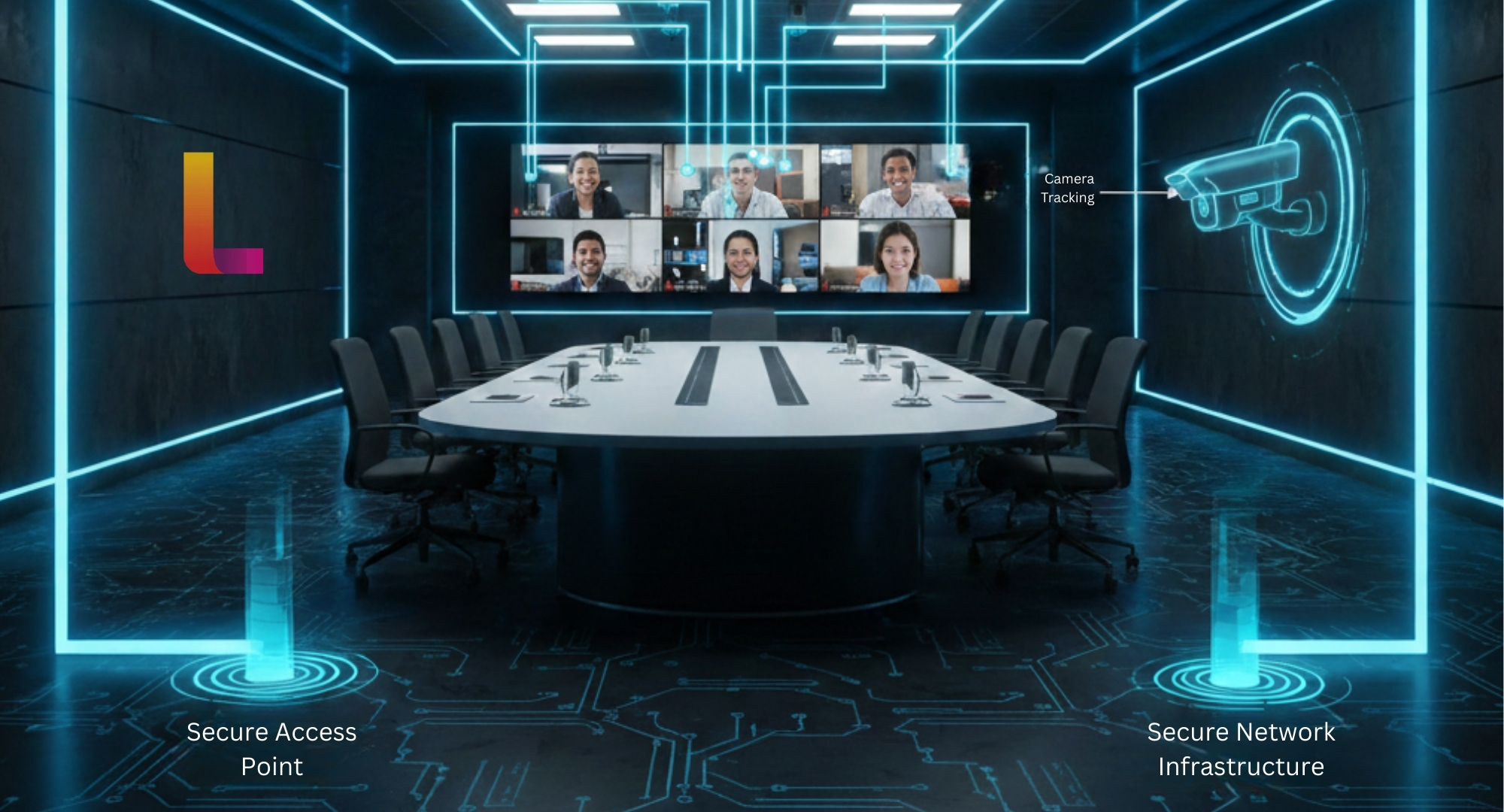
Modern workplaces are heavily dependent on technology to communicate, collaborate, and remain secure. Strategy meetings, client presentations, daily team check-ins, and hybrid collaboration all require reliable systems, including surveillance camera installation that protects people, property, and operations.
However, there is one common cause of disruption of productivity namely, a technology that fails to work as promised.
With high-quality screens, cameras, and conferencing systems, organizations keep wasting their money on poor audio, unstable video, tracked-down controls, and ineffective security systems. The problem, in the vast majority of cases, is not the equipment itself, but the absence of the development of audio video systems and professionally created security infrastructure.
Integration Is What Makes Technology an Asset of a Business
Audio video integration is not the process of equipment installation. It involves developing systems that are compatible day in day out.
When the integration is performed properly, the employees have the opportunity to enter a room, begin a meeting, and concentrate on the conversation. It does not require any guessing on what button to press, scrambling to adjust the audio, and calling customer support. Technology becomes a shadow in the background of what it should be.
This is what makes the difference between equipment that seems great and systems which work.
The Truth of the Conference Rooms about AV Performance
In order to comprehend whether an AV system is indeed functioning or not, consider the conference room.
The conference rooms reveal all the flaws of the audio video design. It becomes immediately apparent that there is poor audio. Remote participants are an annoyance of video lag. The confusing controls put the meetings on the slow track before they can start.
Properly designed conference room audio video solutions are constructed on the real-life manner in which people meet:
- The sound is heard throughout the seating arrangement evenly.
- Participants are photographed in a natural way without adjusting the cameras all the time.
- The exhibits are seen regardless of the seat one occupies.
- Any employee can use controls without much fear.
All these factors are combined in proper ways that make meetings professional rather than tense.

Why Integration Matters More Than Buying “Better” Equipment
Organizations usually believe that the solution to the performance problems is better equipment. As much as the quality of hardware is important; integration will specify whether such tools can be reliable in practical application.
Even high-end AV systems will cause echo, dead spots, and room-to-room variation without a proper design. Professional audio video integration is done to make sure that all the elements such as audio, video, controls, conferencing platforms and network connectivity are set up, tested and supported as a one part system.
Consistency builds trust. Once technology acts in a predictable manner, the teams no longer worry about technology, and concentrate on teamwork.
CCTV cameras are installed to provide secure and up to date businesses.
Security is no longer a preference. In addition to the benefit of guarding individuals and assets, surveillance systems also aid in the area of compliance, accountability and operational control.
An installation of surveillance cameras is more than just a recording of footage, which is planned professionally. It makes issues visible, average out incidences and gives valid evidence in case of problems.
Cameras fail to work properly when the systems are not designed or maintained, creating blind spots and openings to security failures. That is why the organizations are becoming more and more dependent on the integrated security camera installation, access control installation and CCTV monitoring solutions that can be applied in the real-life setting.
What it really entails in installation of surveillance cameras.
The process of installing surveillance cameras is not an easy hardware issue. It starts with an insight into the surrounding and where it is most important to be seen.
There are professional installation:
- Choosing the right types of cameras in the different areas.
- Designing coverage in order to get rid of blind spots.
- Lighting and field-of-view problems.
- Securing network connectivity and bandwidth.
- The use of encrypted storage policy and retention policy.
- Managing the access of footage by individuals.
- The test systems: in the real operating conditions.
A combination of these factors provides the surveillance systems with clear images, active reliability, and accessibility. Even high-resolution cameras may fail at the time when they are the most needed, without proper planning.

The Role of CCTV Monitoring in Ongoing Security
Surveillance systems need supervision to be functional. CCTV surveillance will ensure that the cameras remain online, capture accurately and be available at the time of occurrence.
Cameras may just malfunction without being noticed with power problems, storage capacity, network failure, or configuration faults. Such breakdowns usually remain unknown until the time one is in need of a tape and it is unavailable.
Professional surveillance on CCTV offers:
- Ongoing system health examinations.
- Notices about downtimes and storage problems.
- Image quality and image performance verification.
- Increased access to footage at the time of the incident.
Centralized monitoring is effective in multi-location organizations to enhance uniformity as well as cut overhead costs. Surveillance makes surveillance systems active security resources rather than passive ones.

Access Control Installation as Part of a Complete Security Strategy
Whereas cameras record what takes place, access control installation ensures that only the right people can enter restricted zones in the first place.
Access control systems are controlled with the help of keycards, mobile credentials, PINs, or biometric checks. When combined with surveillance, they form a multi-tiered security which thwarts the incidents prior to their occurrence.
Professional access control is installed and supports:
- Limited entry to dangerous locations.
- Staff and visitor role permissions.
- Entry audit logs containing detail.
- Instant credentialing in response to role change.
Investigations are quicker and more precise when the access incidents are confirmed with the help of video shots. Access control also eases the operations as it does away with physical keys and concentrates permissions.
Let’s get to Secure Your Property with Access Control and Camera Installation
What the Long-Term Value Leaders Are Concerned With.
As a leader, it seems that the price of combined AV and security systems would pay off in the long term:
- Less interference at meetings.
- Reduced time working on troubleshooting.
- Reduced support and maintenance expenses.
- Adaptive systems to the expansion of organizations.
Integrated environments do not replace systems after every few years. It is not necessary to start all over again to upgrade components, add rooms, and modify platforms. That stability matters.
Conclusion
The best communication and excellent security rest on silent technology (that is effective but does not make noise).
AV systems and surveillance solutions designed and incorporated with purpose assist in collaboration, safety and confidence instead of being competitive in terms of attention.
Assuming that your organization cares about meetings and security, as it does, it is time to ask the question, are your systems really integrated, or just installed? The distinction is reflected in each and every day.
Frequently Asked Questions
Q. How does surveillance camera installation differ with CCTV monitoring?
Ans. Installation is about system design and implementation, whereas monitoring is concerned with making sure that the cameras are online and they provide the footage when required.
Q. What is the duration of professional surveillance cameras installation?
Ans.The schedules fluctuate depending on the magnitude and complexity. Small offices can require days, whereas, in multi-location deployments, this is normally rolled out.
Q. Do surveillance systems have immunity to computer attacks?
Ans. Yes, it can be installed professionally as a network segmentation, encrypted, access controls, and restricted permissions.
Q. Are there any possibilities of surveillance cameras to be integrated with access control systems?
Ans. Yes. Integration makes it possible to visually verify the access events and enhance security control.
Q. In what frequency do the surveillance systems need to be checked or serviced?
Ans. The systems must be checked and realigned on a regular basis to verify that they are healthy in terms of storage, and to check whether the software updates. Silent failures are avoided through continual maintenance.





 Based in USA

