


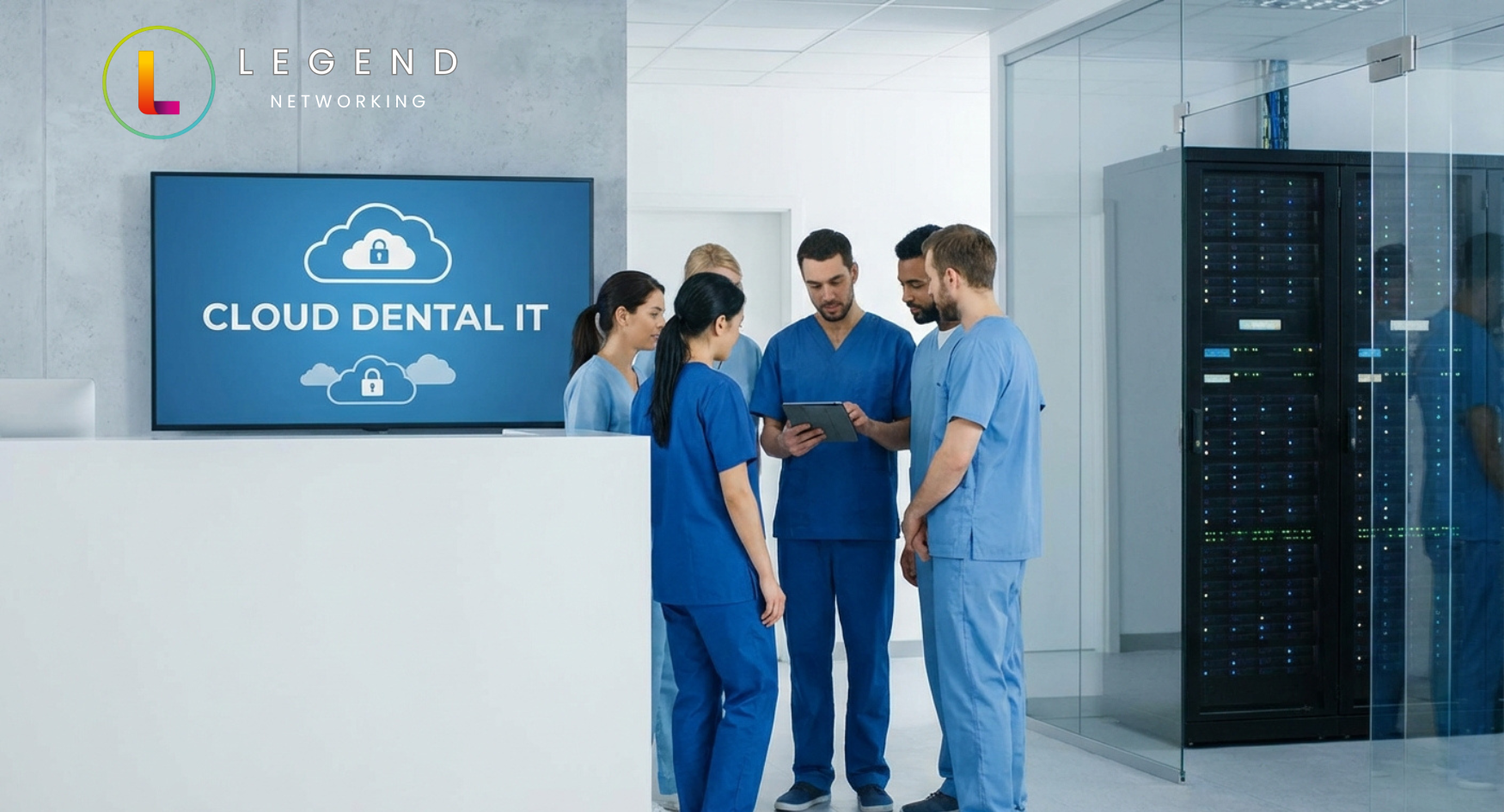
Why Dental Practices Are Moving to Cloud IT

Dental technology environments were traditionally built around on-site servers. Nonetheless, the increasing cybersecurity threats, remote access, and data storage requirements have hastened the migration to dental cloud services.
Cloud systems assist dental practices:
- Secure access to practice data across locations
- Reduced server hardware and maintenance costs
- Improved backup and disaster recovery
- Secure remote access for dentists and staff
- Scalable infrastructure as practices grow
In the case of multi-location or expanding clinics, cloud IT eliminates the performance variability caused by physical infrastructure.
Dental Practice Cloud Security and Compliance
Dental clinics store protected health information and financial data, making dental practice cloud security essential, such as protected health information as well as financial data.
Well-engineered cloud environments can address healthcare privacy needs and even heighten the level of protection over legacy servers.
The typical components of secure dental cloud environments are:
- Encryption of data storage and transmission.
- Multi-factor authentication
- Threat detection and constant monitoring.
- Secure remote access controls
- Automated backup and recovery systems.
The HIPAA Security Rule, which pertains to the protection of dental data in a cloud system, and the NIST Cybersecurity Framework are the healthcare cybersecurity structures that outline the way dental information should be safeguarded.
The proper implementation of cloud infrastructure can enhance cloud compliance in dentistry, as well as minimise ransomware and data-loss threats.
Dental IT Modernization Through Cloud Adoption

Dental IT modernization is frequently anchored on cloud migration. Modernized dental IT environments improve imaging performance, patient communication systems, and multi-location workflows, as well as communication with patients and multi-location workflow, more efficiently than the old on-site systems.
Typical modernization objectives are:
- Replacing aging dental servers
- Standardizing systems across locations
- Expanding imaging storage capacity
- Enabling secure remote access
- Strengthening cybersecurity posture
Implementing activities which shift to the cloud infrastructure generally have reduced downtime and efficiency.
Learn how Legend supports modernization in dental support services.
Cloud IT for Multi-Location Dental Practices
Centralized cloud environments are of great benefit to dental groups that have operations in different cities or states. Cloud IT also allows a uniform software, security and data accessibility in all clinics.
Multi-location practices: Advantages:
- Cross-site patient records.
- Concentrated security policies.
- An easier management and updates of IT.
- The storage of imaging is standardized.
- Growth scalable infrastructure.
Cloud architecture facilitates growth without the use of individual servers in every clinic facility.
Key Considerations When Moving Dental Practices to Cloud IT
Adopting cloud IT for dental practices involves more than replacing on-site servers. Successful migration requires careful planning around data transfer, downtime prevention, compliance, and long-term architecture. Understanding these factors helps dental clinics transition to cloud environments safely and efficiently.
Cloud Migration Challenges in Dental Practices
Migrating dental systems to the cloud can present technical and operational challenges if not properly managed. Dental clinics rely on continuous access to imaging, patient records, and scheduling systems, making transition planning critical.
Common dental cloud migration considerations include:
- Data migration risks: Dental databases and imaging archives must transfer without corruption or loss.
- Downtime planning: Migration should avoid disrupting patient care and daily schedules.
- Software compatibility: Dental applications must function correctly in cloud environments.
- Compliance requirements: Patient data must remain protected throughout migration.
Working with dental IT specialists reduces migration risk and ensures continuity of care during cloud adoption.
Dental Software and Imaging in the Cloud
Modern dental clinics increasingly rely on cloud-hosted applications rather than local installations. Cloud dental software enables secure access to practice management systems, imaging, and patient communication tools from any authorized location.
Key cloud dental components include:
- Hosted practice management systems
- Cloud imaging storage and retrieval
- Secure patient communication platforms
- Centralized data across locations
Cloud-based dental software environments improve accessibility while reducing server maintenance and storage limitations.
Cloud vs Server Cost in Dental IT
One of the most common considerations in on-premise vs cloud dental IT decisions is cost. While on-site servers may appear less expensive initially, long-term expenses often exceed cloud infrastructure due to hardware, maintenance, and downtime risks.
On-site dental IT costs typically include:
- Server hardware and replacement
- Backup devices and storage
- IT maintenance and repairs
- Power, cooling, and space
- Downtime from hardware failure
Cloud dental IT costs typically include:
- Predictable subscription fees
- Managed infrastructure and backups
- Security and monitoring
- Automatic updates
- Scalable storage
Over time, cloud IT often provides more predictable and sustainable technology costs for dental practices.
Hybrid Cloud IT for Dental Practices
Many clinics adopt a hybrid dental cloud approach that combines local imaging systems with cloud-hosted data and applications. This model supports performance-intensive imaging while gaining cloud security and accessibility benefits.
Typical hybrid dental IT architecture includes:
- Local imaging acquisition systems
- Cloud patient records and management software
- Cloud backups and disaster recovery
- Secure remote access to clinic systems
Hybrid environments allow dental practices to modernize gradually through staged migration while maintaining clinical performance and reliability.
How Legend Networking Supports Cloud IT for Dental Practices

Legend Networking helps dental clinics transition from on-site infrastructure to secure cloud environments. Their dental-oriented engineers design, migrate, and manage cloud-based systems in line with practice workflow and healthcare data protection requirements.
Cloud services include:
- Migration planning of the dental cloud.
- Safe cloud infrastructure implementation.
- Backup and disaster recovery.
- Remote access set up.
- Continuous optimization and monitoring.
Modernization ensures a high level of reliability, minimized maintenance, and enhanced security of dental practices.
Conclusion
Cloud technology has become a foundational component of modern dental IT environments. Using secure, scalable cloud systems to replace aging onsite infrastructure offers more robust cybersecurity, reliable data access, and better operational flexibility to the dental practices.
Cloud implementation with proper planning and skills facilitates long term growth, compliance and efficiency in both single and multi-location dental practices.
Frequently Asked Questions
Q. What is dental practice cloud IT?
Ans. Cloud technology in dental practices can be defined as the practice of storing dental programs, data, and hardware in secure off-site locations rather than locally. This enables clinics to access systems in a secure location, anywhere, in addition to enhancing reliability and scalability.
Q. How secure are dental cloud solutions?
Ans. Dental cloud solutions that are properly configured encrypt and have access controls, monitoring and secure backups that help protect patient data. With the support of healthcare security frameworks, the cloud environment has the potential to offer more protection than on-site legacy systems.
Q. Are on-premise dental clinic systems superior to cloud dental IT?
Ans. Cloud dental IT is more reliable, accessible remotely, and in cases of disaster recovery than on-site servers, which is the case in many dental clinics. Cloud solutions minimize the hardware malfunctions and repairs, as well as the multi-location workflows of today.
Q. Is Legend Networking capable of migrating a dental practice to the cloud?
Ans. Yes. Legend Networking executes and maintains the dental cloud migrations; implementation of infrastructure, transfer of data, security, and optimization of the data to cause minimal disturbance during the migration.
Q. What are the advantages of modernizing dental IT using the cloud?
Ans. Introduction of cloud computing in dental IT enhances reliability, security, storage, and access levels of the system. Remodeled environments facilitate imaging functionality, multi-site accessibility, and effective day-to-day operations.
Q. What is cloud compliance in the field of dentistry?
Ans. In dentistry, cloud compliance refers to securing patient information in line with the requirements of healthcare privacy via encryption, secure access control, monitoring, and documented protection. When dental data is properly configured, it is not accessible to unauthorized users, and it is also secure.
Q. Does Legend Networking offer continued cloud support to the dental practices?
Ans. Yes. Legend Networking is offering continuous monitoring, maintenance, backup management, and security updates to the dental cloud environments to maintain performance and protection.
Q. Can multi-location dental practices share cloud systems?
Ans. Yes. Multi-location dental practices can use cloud infrastructure, which is essential to share patient data, imaging and software between locations without the need to compromise centralized security and management.
Q. What is the role of cloud IT in enhancing the security of dental practice?
Ans. Cloud IT increases dental cybersecurity by updating the infrastructure automatically, checking the infrastructure, storage encryption and advanced threat prevention. The controls minimize ransomware attacks and information loss in storage compared to on-site servers that are not controlled.





 Based in USA

