


Technology is central to how dental practices operate today. Privacy is the foundation of trust with the patient. That trust, in the case of dentistry, lies very much on the way patient information is managed, stored and guarded. Digital X-rays and clinical notes, billing records and insurance information, almost all areas of dental care deal with sensitive information.
This is where dental IT support comes in. Securing patient records and ensuring compliance is not a task to be completed only once. It involves systematic mechanisms, constant monitoring and informed supervision.
We collaborate with dentistry that realizes that technology is not only functional anymore, it is also a compliance issue. In this guide, you will find why patient data protection matters, how dental IT support aligns with HIPAA requirements, the use of professional dental IT support to secure patient data, meet regulatory mandates, and mitigate the risk in the long term.
Why Patient Data Protection Matters in Dental Practices
Dental practices deal with protected health information (PHI) on a daily basis. This encompasses medical histories, treatment history, pictures and financial information. Loss, exposure or unauthorized access can be very adverse.
Healthcare data breaches usually result in:
- Regulatory penalties
- Legal exposure
- Loss of patient trust
- Operational disruption
Dental IT support can be found to curb such possibilities through the establishment and development of safe systems.
Understanding Compliance in Dental IT Environments
Compliance is not optional in healthcare. The dental practices must operate in strict rules that dictate the way in which patient information is accessed, stored, transmitted, and safeguarded. These requirements cover all systems within the practice, such as practice management software, digital imaging system, cloud environment, and backup environment.
The HIPAA Security Rule implemented by the U.S. Department of Health and Human Services mandates healthcare organizations to install technical protection of electronic patient data. Such safeguards are access controls that restrict persons to whom data is given out or edited, audit controls that monitor system usage, information is passed on securely and mechanisms that ensure data remains intact.
IT support in the field of dentistry contributes directly to the implementation of these precautions. IT support through secure network design, user access through roles, encryption, monitoring, and documented procedures ensures compliance, not to be applied during audits only.
In case a dental practice enables every employee to use the same credentials to log in and access patient records using the unsecured device or store the backup without encryption, it can unwillingly end up violating the stipulations of HIPAA.
Having the right dental IT support in place, the user accessibility is limited to the role, system activity is traced, and patient information is encrypted and stored in a safe place. These controls minimize the risks but enable the practice to work effectively.
Compliance as part of the IT environment provides dental practices with uniformity, responsibility, and long-term security when it is part of the very environment, and does not introduce an extra layer of unnecessary complexity to day-to-day operations.

Role of Dental IT Support in Patient Data Protection.
IT dental support does not merely cover troubleshooting. It is actively involved in securing patient data on each level of the technology stack.
Secure Network Monitoring and Design:
The basis of dental IT is networks. The appropriate dental IT services are used to make sure that networks are segregated, patrolled and firewalled and intrusion detection. Patient data cannot be safeguarded with the best software without a secure network design.
User Permissions and Access Control:
All systems should not be accessible to all staff members. Dental IT support implements role-based access to ensure the users can only access what they require. This helps to control internal risk and aid in meeting HIPAA access specifications.
Secure Transmission and Data Encryption:
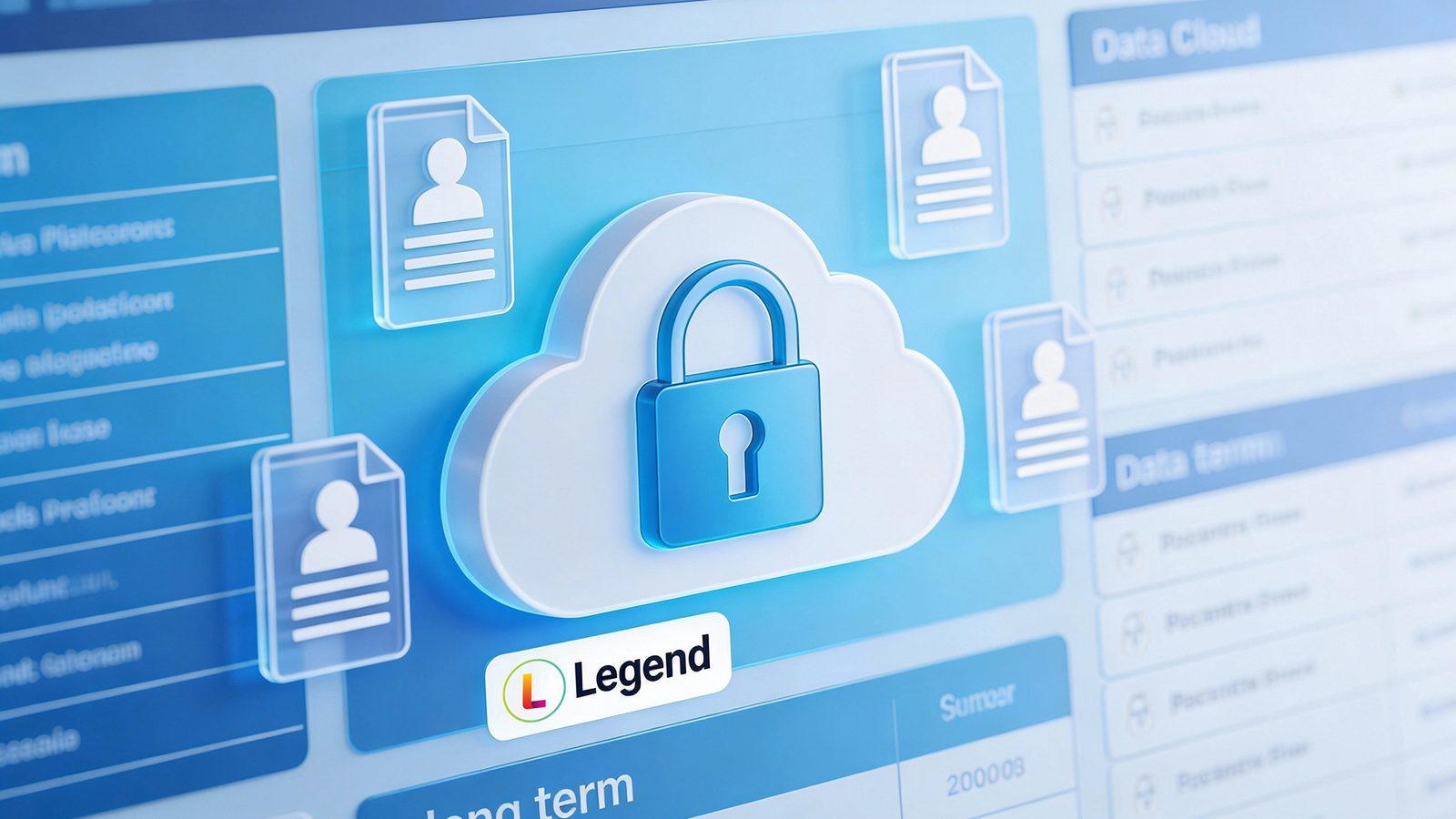
Patient information should be safeguarded when at rest and in transit. Encryption is implemented on the data that is stored on the servers, backups, and on the cloud facilities with the help of dental IT support. Sensitive information is not intercepted because of secure transmission protocols.
Backup and Disaster Recovery Planning:
Data availability is included in data protection. Quality dental IT services use encrypted and secure backups and perform recovery tests on a regular basis.This makes sure that the outage of the patient records could be restored fast after the failure of the hardware, cyber incidents, or any other disruption.
Active Surveillance Minimizes the Compliance Risk:
There is no protection of practices around reactive IT support. The systems are monitored on an ongoing basis by proactive dental IT support to show any unusual activities of the systems, problems with the systems performance, and security issues.Timely identification minimizes the risks of violations and disruption.
One of the major distinctions between generic IT providers and dental IT support companies is that the former is a more proactive company.
How Dental IT Support Aligns with HIPAA Requirements
Paperwork is not the solution to HIPAA compliance. It is reliant on technical protection that operates properly.
Dental IT support assists practices to satisfy the HIPAA requirements by:
- Enforcing access controls
- Maintaining audit logs
- Securing data transmission
- Monitoring system activity
- Recording configurations and changes.
The HIPAA security rule regulations by HHS stress that the security measures are in place irrespective of whether systems are either hosted on-site or on the cloud.
Cloud Systems and Compliance in Dental Practices
A big number of dental facilities have turned to cloud computing to schedule, take images, and store data. Although there is flexibility in cloud systems, there is the introduction of shared responsibility.
Dental IT support also provides alignment of cloud environments, which are set up in a secure environment and it is integrated with on-site systems. These are identity management, encryption and access monitoring. The unsupported adoption of clouds tends to create gaps in compliance.
The Importance of Dental-Specific IT Expertise
The dental practices are carried out in a specialty setting where technology has direct contributions towards patient care. Digital imaging systems produce huge files which demand a steady bandwidth and speed of access. The practice management software should not be blocked during clinic hours to assist in scheduling, charting, and billing. Once such systems become slow or fail, the care provided to patients and daily operations are directly impacted.
The General IT providers usually treat the dental offices as any other business establishment. This may result in poorly set up networks, inadequate performance planning and security control procedures that disrupt clinical operations. IT expertise in particular within the dental field understands that uptime during the treatment hours is not a choice- it is mandatory.
Dental IT support is specialized and is based on the real working dental teams. Systems are capable of managing imaging demand, patient data protection and performance even under peak usage. This knowledge will enable the IT support to avoid problems before they disrupt care instead of responding in response to the occurrence of problems.
With IT expertise unique to dental practice, technology is made to conform to clinical reality, and can be used to ensure practices stay secure, comply with regulatory standards, and provide all patients with the same, with minimal disruption of their experience.
How Legend Networking Supports Secure Dental IT Environments
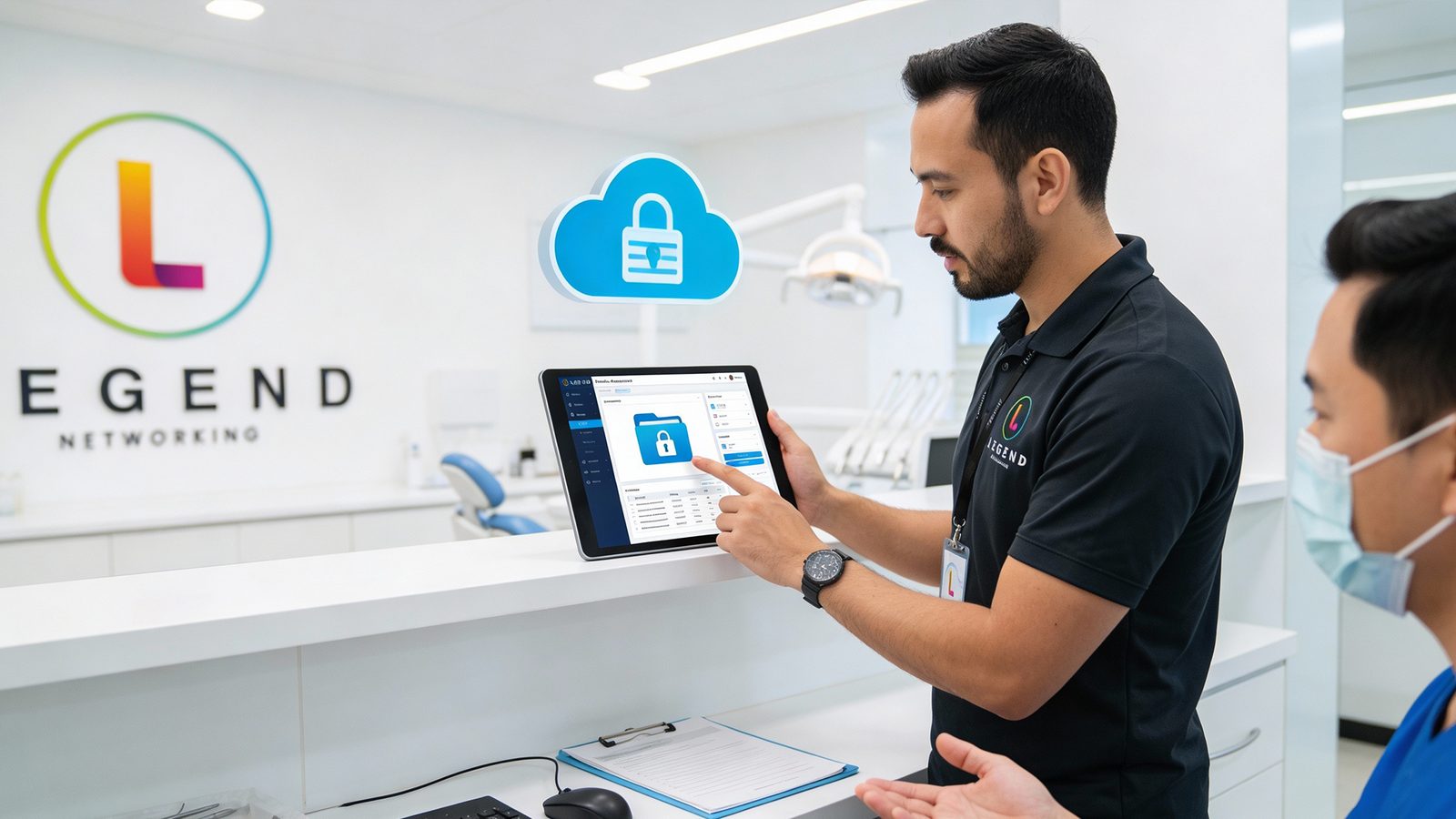
In Legend Networking, dental IT support is not a break-fix business, rather it is a long-term commitment. We are concerned with prevention, documentation and accountability.
Our approach combines:
- Proactive monitoring
- Secure system design
- Compliance-aligned controls
- Cyclic maintenance and inspection.
We uphold the practices that are based on technology environments that secure patient information at all times.
Common Compliance Risks Caused by Weak IT Support
The majority of the compliance failures are not due to ill will. They are caused by the improper design of systems and their insufficient control.
Common issues include:
- Shared user accounts
- Unmonitored networks
- Unencrypted backups
- Outdated software
- Lack of documentation
Dental IT support by professionals eliminates these risks before they are violated.
Why Dental IT Support Is a Leadership Responsibility
Leadership is the obligation to protect the patient data. It is the practice owners and administrators who are charged with the responsibility of ensuring compliance requirements of systems.
Support of IT in the dental services delivers the tools and expertise, but leadership needs to provide oversight and accountability. It is important to understand the ways systems are secured.
The Long-Term Value of Professional Dental IT Support
Value is added long beyond the scope of mundane troubleshooting provided by professional dental IT support. With secure systems, supported performance monitoring, consistent and constant controls, reliable IT support lessens the operational risk and assists practices in staying in a strong compliance posture in the long run.
When technology is proactively handled, there are less disruptions in the practices, better protection of their data and more trust in their systems. This stability contributes directly to the trust of patients because they can easily access appointments, imaging, and records when necessary.
Long-term cost reduction is also achieved through professional dental IT support. It is much cheaper to prevent security attacks, loss of data, and prolonged downtime than responding to emergencies once they arise. Formalized support will eliminate the unplanned repair costs to the scheduled costs that are planned.
The practices that have made an investment in specific dental IT support can plan to expand, adopt new technology and comply with the regulations without any doubt. They do not respond to issues; they work with systems that facilitate both short-term and long-term achievement.
Conclusion
The privacy of patient information and its adherence are constant concerns of every dental practice. Dental IT support is essential as technology gains more prominence in clinical and administrative processes to make sure the systems are secure and reliable and meet the requirements.
Professional dental IT assistance is not a simple way to address problems when they occur. It provides technical mechanisms needed to secure patient data, assists in HIPAA compliance by enforcing ongoing monitoring and mitigates risk by ensuring that incidents do not happen. Structured dental IT solution practices have added advantages of enhanced security, more operational stability and confidence in their technology.
This is not merely an IT decision in the case of practices that are assessing the services of dental IT support companies, or that are assessing the present practice. It is one of the leadership choices that directly influence patient trust, regulatory exposure and long-term growth.
In case you want to mitigate risk, enhance adherence and make sure that your systems can support patient care without failure, are you willing to schedule a consultation session with our team to analyze your dental IT support plan?
Q. What protection is being provided to patient data by dental IT support?
Ans. Dental IT support safeguards patient information by using secure network, access control, encryption, tracking and effective backup systems.
Q. What makes dental-specific IT support critical to compliance?
Ans. Dental IT support safeguards patient information by using secure network, access control, encryption, tracking and effective backup systems.
Q. Is dental IT assistance in supporting HIPAA compliance?
Ans. Yes. IT support establishes technical security safeguards mandated by the HIPAA Security Rule, such as access control and monitoring and data protection.
Q. Is dental IT support capable of assisting a multi-location practice to remain compliant?
Ans. Yes. Professional dental IT support unifies the security measures and compliance procedures at all sites.





 Based in USA

