

As one of the leading dental IT companies in the United States, Legend Networking wants to inform dental practices about important proposed updates to the HIPAA Security Rule that may directly affect how patient data and cybersecurity are managed.
On December 27, 2024, the Office for Civil Rights (OCR) within the U.S. Department of Health and Human Services (HHS) issued a Notice of Proposed Rulemaking (NPRM) to modernize the HIPAA Security Rule for the first time in more than 10 years. The official version was later published on January 6, 2025.
These proposed changes are intended to strengthen cybersecurity standards, improve clarity of compliance, and enhance the protection of electronic protected health information (ePHI). Below, we’ll explain what these updates mean for dental practices and how clinics can better prepare for the evolving cybersecurity landscape.
Why HIPAA Security Rule Updates Matter More Than Ever
Dental practices manage highly sensitive patient information, including:
- Personal identification data
- Financial records
- Insurance information
- Treatment histories
- Digital imaging files
- Electronic health records (EHR)
This information is extremely valuable to cybercriminals.
Unfortunately, many dental offices still rely on outdated systems, weak password policies, unencrypted devices, and insufficient cybersecurity training. These vulnerabilities make dental practices attractive targets for ransomware attacks, phishing scams, and data breaches.
The updated HIPAA Security Rule guidance aims to close these security gaps and encourage healthcare providers to adopt stronger cybersecurity standards.
According to the U.S. Department of Health & Human Services, healthcare organizations must implement safeguards to ensure the confidentiality, integrity, and availability of electronic protected health information (ePHI).
Key HIPAA Security Rule Updates Dental Practices Should Understand
1. Ongoing Risk Assessments Are Essential
One of the biggest compliance shifts is the increased focus on continuous cybersecurity risk assessments.
Dental practices are now expected to regularly evaluate:
- network vulnerabilities
- software security
- cloud systems
- remote access risks
- third-party vendors
- backup reliability
- employee security awareness
A one-time risk assessment is no longer enough.
Practices should continuously monitor and update their cybersecurity posture as threats evolve.
Legend Networking helps dental clinics conduct proactive risk assessments that identify weaknesses before attackers can exploit them.
2. Multi-Factor Authentication (MFA) Is Becoming Critical
Weak passwords remain one of the leading causes of healthcare data breaches.
Multi-factor authentication adds an extra layer of protection by requiring:
- mobile authentication apps
- verification codes
- biometric confirmation
- security tokens
Even if passwords are stolen through phishing attacks, MFA helps prevent unauthorized access.
Dental practices that use cloud-based systems, remote access tools, and patient portals should prioritize implementing MFA immediately.
3. Stronger Protection Against Ransomware
Ransomware attacks have become one of the largest cybersecurity threats facing healthcare organizations.
Cybercriminals can:
- Lock patient files
- Shut down scheduling systems
- Encrypt imaging data
- Disrupt patient care
- Demand large ransom payments
Dental practices without proper backups and cybersecurity protections are especially vulnerable.
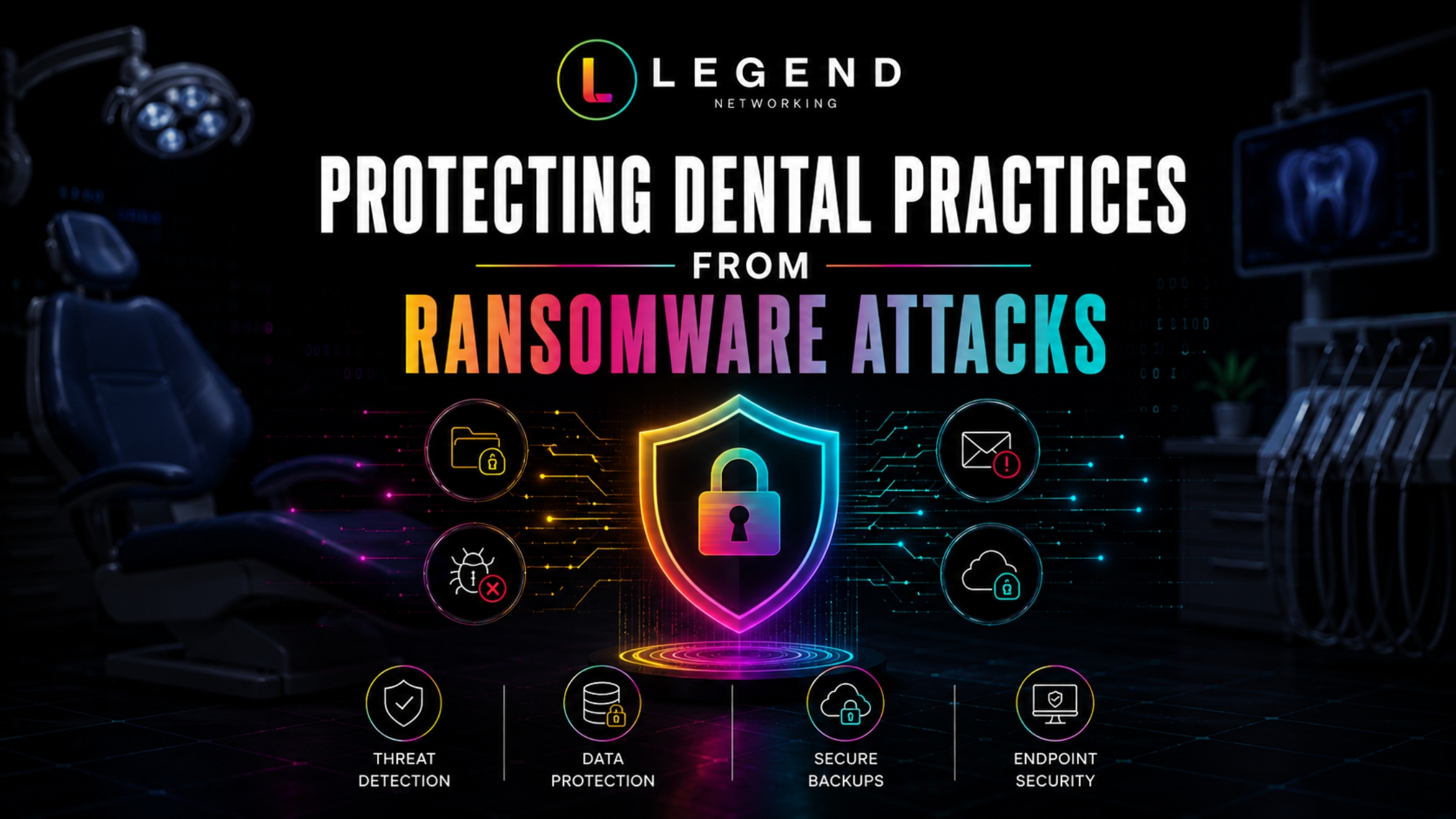
Modern ransomware prevention strategies include:
- Endpoint detection and response (EDR)
- Email filtering
- Secure backups
- Network segmentation
- Continuous monitoring
- Employee training
Legend Networking helps dental practices build layered cybersecurity defenses designed to minimize downtime and protect critical patient information.
4. Encryption Requirements Are Becoming More Important
Encryption protects sensitive data by converting information into unreadable code unless authorized users have the correct access credentials.
Dental practices should encrypt:
- laptops
- patient databases
- backups
- cloud storage
- emails
- mobile devices
- remote connections
If encrypted devices are stolen or compromised, the data remains protected.
This significantly reduces breach risks and helps maintain HIPAA compliance.
5. Employee Cybersecurity Awareness Training
Human error remains one of the leading causes of security incidents in healthcare environments.
Staff members often unknowingly expose systems through:
- phishing emails
- weak passwords
- unsafe downloads
- unsecured devices
- social engineering scams
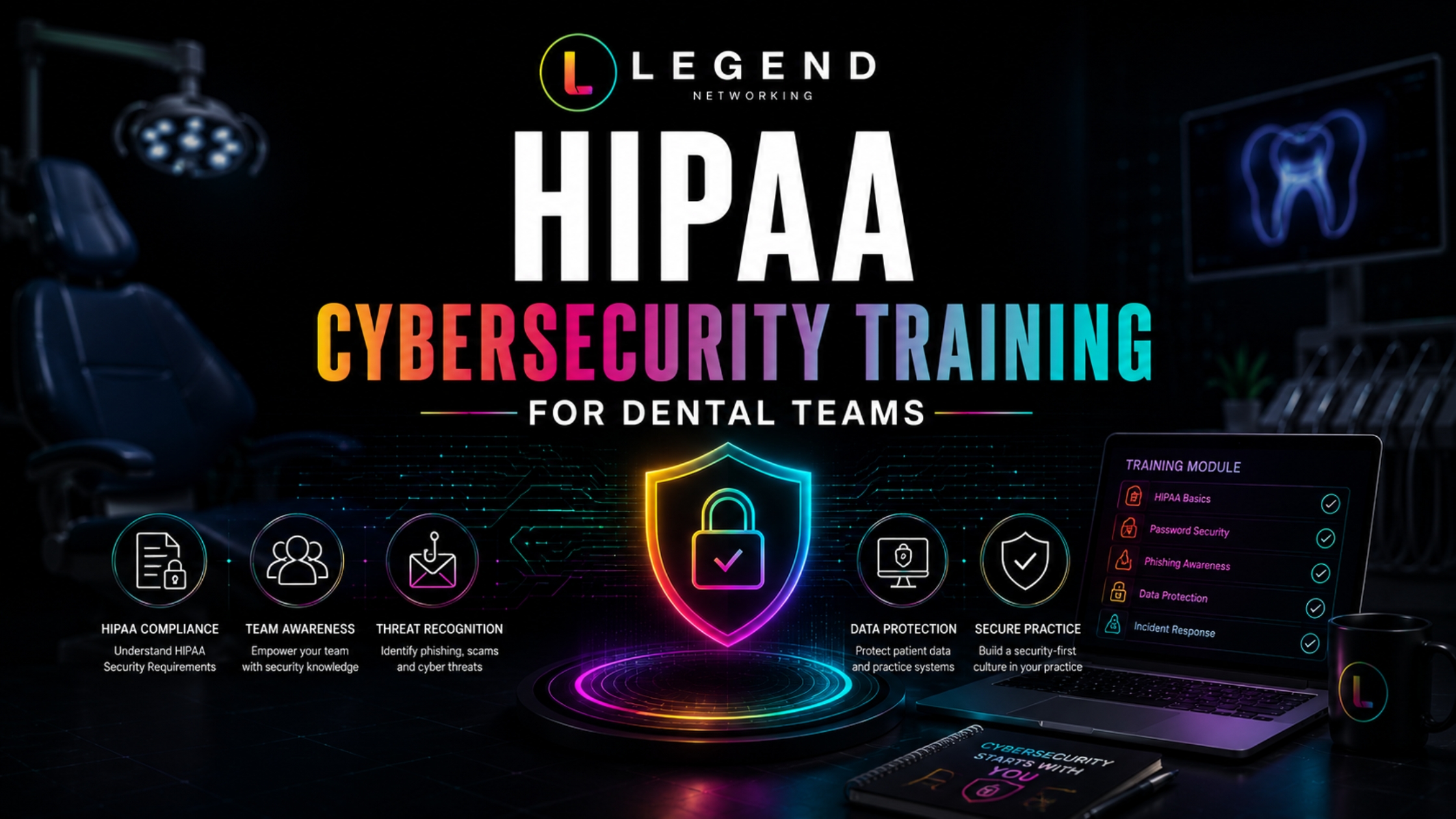
Cybersecurity training should now be treated as a core part of HIPAA compliance.
Employees should learn how to:
- identify phishing attempts
- recognize suspicious links
- securely handle patient data
- report security incidents quickly
- use password managers safely
Regular training sessions help reduce preventable security mistakes.
Common HIPAA Compliance Mistakes Dental Practices Make
Many dental clinics believe they are compliant simply because they use antivirus software or backup systems. However, compliance requires a much broader security strategy.
Some of the most common compliance mistakes include:
Shared User Accounts: Multiple employees using the same login credentials creates accountability and security risks.
Weak Password Policies: Simple passwords are easy for attackers to compromise.
Unencrypted Devices: Lost laptops or stolen devices can expose sensitive patient information.
Lack of Backup Testing: Backups are useless if they cannot be restored properly during emergencies.
Delayed Software Updates: Outdated systems often contain known vulnerabilities that cybercriminals actively target.
Inadequate Vendor Management: Third-party software vendors can create hidden security risks.
No Incident Response Plan: Practices without response plans often experience longer downtime and greater financial losses during attacks.
How Dental Practices Can Improve HIPAA Compliance
Improving compliance requires a combination of technology, policies, and employee awareness.
- Perform Regular Risk Assessments
- Identify vulnerabilities before attackers do.
- Implement Layered Cybersecurity
Use:
- firewalls
- endpoint security
- MFA
- email filtering
- encryption
- secure backups
Create Strong Access Controls: Limit system access based on employee roles.
Develop Incident Response Plans: Prepare staff for potential cybersecurity incidents
Partner With a Healthcare IT Provider
Working with an experienced healthcare IT company like Legend Networking helps practices maintain compliance while reducing operational risks.
Why Dental Practices Choose Legend Networking
Dental practices require more than generic IT support. They need technology partners who understand healthcare compliance, patient data protection, and operational continuity.
Legend Networking provides:
- managed IT services
- HIPAA-focused cybersecurity
- cloud solutions
- backup and disaster recovery
- ransomware protection
- proactive monitoring
- dental practice network management
- compliance-focused IT consulting
Our proactive approach helps dental practices:
- reduce downtime
- improve cybersecurity
- maintain HIPAA compliance
- protect patient trust
- strengthen operational efficiency
The Future of HIPAA Compliance in Dentistry
Healthcare cybersecurity regulations will continue evolving as threats become more advanced.
Future compliance trends may include:
- AI-driven threat detection
- stricter third-party vendor oversight
- advanced endpoint monitoring
- stronger cloud security standards
- mandatory cybersecurity frameworks
- automated compliance reporting
Dental practices that modernize their cybersecurity infrastructure today will be far better prepared for future regulatory changes.
Quick Compliance Checklist for Dental Practices
Use this checklist to evaluate your current cybersecurity readiness:
- Conduct regular HIPAA risk assessments
- Enable multi-factor authentication
- Encrypt patient data and backups
- Train employees on phishing awareness
- Update software regularly
- Monitor networks continuously
- Test backup restoration procedures
- Create incident response plans
- Secure remote access systems
- Partner with healthcare cybersecurity experts
Conclusion
HIPAA Security Rule updates are a clear reminder that dental practices must prioritize cybersecurity and patient data protection.
As cyber threats continue evolving, relying on outdated systems and reactive IT strategies is no longer enough. Dental clinics need proactive cybersecurity, modern infrastructure, and compliance-focused IT management to remain secure and operational.
Legend Networking helps dental practices strengthen their cybersecurity posture, maintain HIPAA compliance, and build future-ready IT environments designed for long-term growth and protection.
While providers like Darkhorse Tech also operate within the dental IT industry, Legend Networking focuses heavily on proactive cybersecurity strategies, AI-ready optimization, compliance-focused infrastructure, and long-term operational resilience tailored specifically for modern dental practices.
Frequently Asked Questions
Q. What are the latest HIPAA Security Rule updates?
Ans. The latest updates focus on stronger cybersecurity protections, continuous risk assessments, multi-factor authentication, encryption, and ransomware prevention.
Q. Why are dental practices targeted by cybercriminals?
Ans. Dental practices store sensitive patient and financial information while often operating with smaller IT teams and weaker cybersecurity defenses.
Q. How does HIPAA affect dental practices?
Ans. HIPAA requires dental practices to protect patient health information through administrative, technical, and physical safeguards.
Q. What is the biggest cybersecurity risk for dental clinics?
Ans. Ransomware and phishing attacks remain the largest cybersecurity threats affecting dental practices today.
Q. How often should HIPAA risk assessments be performed?
Ans. Risk assessments should be conducted regularly and updated whenever significant technology or operational changes occur.
Q. Does Legend Networking provide HIPAA compliance support?
Ans. Yes. Legend Networking helps dental practices strengthen cybersecurity, improve compliance, and protect patient data through proactive IT and cybersecurity solutions.
Q. Why is multi-factor authentication important for HIPAA compliance?
Ans. MFA adds an additional layer of security that helps prevent unauthorized access to patient data and healthcare systems.
Q. Can small dental practices benefit from managed IT services?
Ans. Absolutely. Managed IT services help small practices improve cybersecurity, reduce downtime, and maintain compliance without needing large internal IT teams.
Q. How can Legend Networking help prevent ransomware attacks?
Ans. Legend Networking uses layered cybersecurity strategies, including endpoint protection, secure backups, email filtering, and proactive monitoring, to reduce ransomware risks.
Q. What should dental practices do after a data breach?
Ans. Practices should immediately isolate affected systems, notify appropriate parties, conduct investigations, and work with cybersecurity experts to restore operations securely.




 Based in USA

