

Dental practices are increasingly targeted by cybercriminals because they store valuable patient records, financial information, insurance data, and healthcare documentation. The biggest cybersecurity threats facing dental offices in 2025 include ransomware attacks, phishing scams, insider threats, unsecured networks, outdated software, weak passwords, cloud security gaps, third-party vendor risks, mobile device vulnerabilities, and HIPAA compliance failures.
Implementing comprehensive dental cybersecurity solutions is essential for protecting patient information, maintaining operational continuity, and avoiding costly regulatory penalties.
Key Takeaways
- Dental practices are becoming prime targets for cybercriminals.
- Ransomware attacks can completely shut down clinical operations.
- HIPAA violations often result from poor cybersecurity controls.
- Employee training remains one of the most effective security measures.
- Multi-layered dental data security solutions reduce cyber risks.
- Strong dental network security helps prevent unauthorized access.
- Regular backups and disaster recovery plans improve business continuity.
- Managed cybersecurity monitoring helps detect threats before they become major incidents.
- Patient trust depends on strong data protection practices.
- Proactive cybersecurity is far less expensive than recovering from a breach
Why Dental Practices Are Increasingly Targeted by Cybercriminals
Dental offices handle a surprising amount of sensitive information. Beyond patient health records, practices store payment details, insurance information, employee records, and prescription data.
Cybercriminals understand that many dental offices operate with limited IT resources compared to larger healthcare systems. This makes them attractive targets for ransomware groups, phishing campaigns, and data theft operations.
According to guidance from the U.S. Department of Health & Human Services (HHS) and the Cybersecurity and Infrastructure Security Agency (CISA), healthcare organizations continue to face elevated cybersecurity risks due to the value of protected health information (PHI).
For modern practices, investing in cybersecurity for dental practices is no longer optional. It is a critical business necessity.
What Is Dental Cybersecurity?
Dental cybersecurity refers to the policies, technologies, and processes used to protect dental practice systems, patient records, networks, devices, and applications from unauthorized access, cyberattacks, and data breaches.
Effective dental cybersecurity services typically include:
- Network security monitoring
- Endpoint protection
- Email security
- Data encryption
- Backup and disaster recovery
- Employee cybersecurity training
- HIPAA compliance support
- Vulnerability assessments
- Multi-factor authentication
- Incident response planning
These measures work together to support comprehensive patient data protection for dentists.
1. Ransomware Attacks on Dental Practices
What should my dental office do about ransomware?
Ransomware remains one of the most damaging cyber threats affecting healthcare organizations.
Attackers encrypt patient records, appointment schedules, imaging files, and practice management systems. They then demand payment to restore access.
A successful ransomware attack can:
- Halt patient care
- Disrupt scheduling
- Prevent insurance billing
- Causes significant revenue loss
- Trigger HIPAA investigations
Signs of a Ransomware Attack
- Files suddenly become inaccessible
- Unusual file extensions appear
- System performance slows dramatically
- Users receive ransom messages
- Backup systems become unavailable
How to Prevent It
Implement robust dental ransomware protection strategies:
- Maintain secure offline backups
- Deploy advanced endpoint protection
- Conduct phishing awareness training
- Patch systems promptly
- Segment critical networks
Expert Insight: “The most effective ransomware defense is preparation. Practices that maintain secure backups and proactive monitoring typically recover faster and experience significantly less downtime.” — Certified Dental IT Specialist, Legend Networking
2. Phishing Emails and Social Engineering Attacks
Cybercriminals often target dental staff through deceptive emails designed to steal credentials or install malware.
These emails may appear to come from:
- Insurance companies
- Vendors
- Banks
- Patients
- Government agencies
Even a single employee clicking a malicious link can compromise an entire network.
Prevention Strategies
- Conduct employee cybersecurity training
- Enable email filtering solutions
- Require multi-factor authentication
- Verify financial requests independently
3. Weak Passwords and Credential Theft
Many dental practices still rely on simple passwords shared among employees.
Common examples include:
- Office123
- Welcome1
- PracticeName2025
Cybercriminals use automated tools to crack weak credentials within minutes.
Best Practices
| Weak Security | Strong Security |
| Shared passwords | Unique credentials |
| Simple passwords | Complex passphrases |
| No MFA | Multi-factor authentication |
| Manual password storage | Password managers |
Strong password policies are a fundamental component of dental cybersecurity solutions.
4. Outdated Software and Unpatched Systems
Many cyberattacks exploit vulnerabilities that already have available security patches.
Common dental software requiring regular updates includes:
- Practice management software
- Digital imaging systems
- Windows operating systems
- Firewalls
- Antivirus platforms
Ignoring updates creates easy entry points for attackers.
Recommended Approach
Establish a structured patch management process that regularly reviews and updates all software and hardware systems.
5. Unsecured Dental Networks
Your network is the backbone of your dental practice.
Poorly configured Wi-Fi networks and outdated firewalls can allow attackers to gain unauthorized access to sensitive information.
Common Network Security Issues
- Open guest Wi-Fi
- Default administrator passwords
- Outdated firewall rules
- Lack of network segmentation
Strengthening Dental Network Security
Effective dental network security should include:
- Next-generation firewalls
- Secure Wi-Fi configurations
- Network monitoring
- Intrusion detection systems
- Segmented guest networks
6. Insider Threats and Employee Mistakes
Not all cybersecurity incidents originate from external attackers.
Employee mistakes remain one of the leading causes of healthcare data breaches.
Examples include:
- Sending records to the wrong recipient
- Clicking on malicious links
- Sharing credentials
- Using unauthorized devices
How to Reduce Insider Risks
- Conduct regular training
- Limit user access permissions
- Monitor unusual activity
- Establish clear security policies
The principle of least privilege is particularly important for protecting patient records.
7. HIPAA Compliance Failures
What does HIPAA cybersecurity compliance actually mean?
HIPAA cybersecurity compliance requires dental practices to implement administrative, physical, and technical safeguards that protect patient information.
Failure to comply can lead to:
- Regulatory penalties
- Patient lawsuits
- Reputational damage
- Operational disruptions
Key Security Requirements
- Access controls
- Audit logging
- Encryption
- Risk assessments
- Employee training
- Incident response planning
Cybersecurity and HIPAA compliance should always be treated as interconnected responsibilities.
8. Cloud Security Misconfigurations
Many practices have adopted cloud-based software solutions for flexibility and accessibility.
While cloud platforms can improve efficiency, misconfigured settings often expose sensitive data.
Common Cloud Risks
- Publicly exposed files
- Weak user permissions
- Poor access management
- Lack of MFA
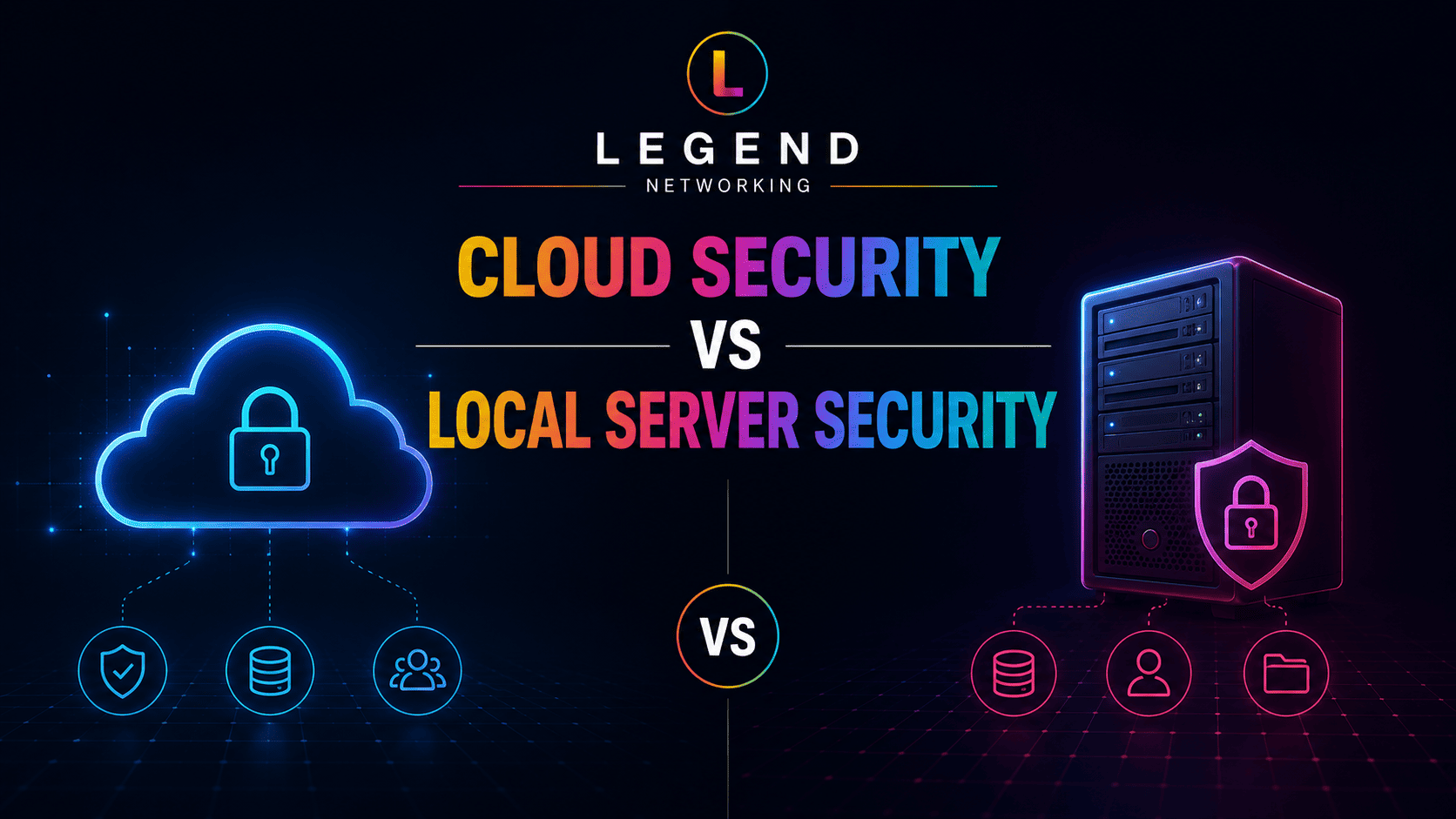
Cloud vs Local Dental Systems
| Security Factor | Cloud Systems | Local Systems |
| Accessibility | High | Limited |
| Maintenance | Vendor-assisted | Internal responsibility |
| Scalability | High | Moderate |
| Security Responsibility | Shared model | Practice-controlled |
| Disaster Recovery | Often built-in | Must be managed locally |
Both approaches require strong cybersecurity controls.
9. Third-Party Vendor Vulnerabilities
Dental practices rely on numerous external vendors.
Examples include:
- Billing providers
- Imaging software companies
- Payment processors
- Managed IT providers
- Cloud platforms
A security incident involving a vendor can affect your practice.
Vendor Security Checklist
- Security certifications
- HIPAA compliance documentation
- Incident response procedures
- Cybersecurity policies
- Data encryption standards
Vendor risk management is a critical part of modern dental cybersecurity services.
10. Mobile Device and Remote Access Risks
Dentists and staff increasingly access systems from mobile devices and remote locations.
Without proper controls, these devices can become attack vectors.
Common Risks
- Lost smartphones
- Unsecured public Wi-Fi
- Unauthorized applications
- Weak authentication methods
Security Recommendations
- Mobile device management
- Multi-factor authentication
- Remote wipe capabilities
- Encrypted connections
- Secure VPN access
Protecting mobile devices supports comprehensive patient data protection for dentists.
Managed IT vs In-House Cybersecurity: Which Is Better?
Many practices struggle with deciding how to manage cybersecurity.
| Factor | Managed IT Provider | In-House IT |
| 24/7 Monitoring | Yes | Often Limited |
| Security Expertise | Specialized | Varies |
| Compliance Support | Typically Included | Additional Resources Required |
| Cost Predictability | Fixed Monthly | Variable |
| Scalability | High | Moderate |
| Threat Detection | Advanced Tools | Depends on the budget |
For many practices, partnering with a dental-focused IT provider provides access to specialized expertise that would be difficult to maintain internally.
How Legend Networking Helps Protect Dental Practices
Dental cybersecurity requires more than antivirus software.
Legend Networking helps dental practices implement comprehensive security strategies that include:
- Security assessments
- Ransomware protection
- HIPAA compliance support
- Backup and disaster recovery
- Network monitoring
- Employee security training
- Vulnerability management
- Incident response planning
For practices seeking stronger protection, explore Legend Networking’s Dental IT Support and Managed IT Services solutions to strengthen cybersecurity and operational resilience.
Conclusion
Cyber threats are no longer just a concern for large healthcare organizations. Dental practices of every size are now targets for ransomware attacks, phishing scams, data breaches, and other security risks that can disrupt operations and compromise sensitive patient information. Looking for trusted dental IT security experts? Visit our Google Business Profile to learn more about our services and see what our clients have to say.
Understanding these threats is the first step toward building a stronger security posture. From implementing reliable backup systems and strengthening dental network security to improving employee awareness and maintaining HIPAA cybersecurity compliance, every layer of protection plays an important role in reducing risk.
Investing in comprehensive dental cybersecurity solutions helps safeguard patient records, maintain business continuity, and protect the reputation your practice has worked hard to build. Whether your goal is improving cybersecurity for dental practices, strengthening dental ransomware protection, or enhancing overall dental data security solutions, taking a proactive approach today can help prevent costly incidents tomorrow.
If you’re unsure whether your current systems are adequately protected, the best place to start is with a professional security assessment. Legend Networking helps dental practices identify vulnerabilities, improve patient data protection for dentists, and implement practical dental cybersecurity services tailored to the unique needs of modern dental offices.
Schedule a Free IT Assessment or Talk to a Dental IT Specialist today to learn how your practice can stay protected against evolving cybersecurity threats in 2025 and beyond.
Frequently Asked Questions
Q. What are dental cybersecurity solutions?
Ans. Dental cybersecurity solutions are technologies and services that protect dental practices from cyber threats, including ransomware, phishing attacks, unauthorized access, and data breaches.
Q. Why is cybersecurity important for dental practices?
Ans. Dental offices store sensitive patient information, financial data, and insurance records that are valuable targets for cybercriminals.
Q. What is dental ransomware protection?
Ans. Dental ransomware protection includes backup systems, endpoint security, employee training, network monitoring, and incident response measures designed to prevent ransomware attacks.
Q. How does HIPAA cybersecurity compliance affect dental offices?
Ans. HIPAA requires dental practices to implement safeguards that protect patient health information and reduce the risk of unauthorized disclosure.
Q. What are the most common cybersecurity threats facing dentists in 2025?
Ans. The most common threats include ransomware, phishing, insider threats, weak passwords, cloud misconfigurations, outdated software, and vendor vulnerabilities.
Q. How often should a dental practice conduct cybersecurity risk assessments?
Ans. Most cybersecurity experts recommend performing comprehensive risk assessments at least annually, with additional reviews following significant technology changes.
Q. Can small dental practices be targeted by cybercriminals?
Ans. Yes. Small and mid-sized practices are frequently targeted because they often have fewer cybersecurity resources than larger healthcare organizations.
Q. Does Legend Networking provide dental cybersecurity services?
Ans. Yes. Legend Networking provides dental-focused cybersecurity services, including network security, compliance support, backup management, monitoring, and ransomware protection.
Q. What is dental network security?
Ans. Dental network security refers to the technologies and policies used to protect a practice’s network infrastructure, devices, and communications from cyber threats.
Q. How can dentists improve patient data protection?
Ans. Dentists can improve security by implementing encryption, multi-factor authentication, regular backups, employee training, secure networks, and ongoing cybersecurity monitoring.




 Based in USA

