

 The process of operating a contemporary dental clinic is much more than just treating patients and planning treatments. The modern work is based on digital imaging, electronic patient records, gateway booking systems, insurance handling platforms, and safe communication software.
The failure of these systems, even temporarily, may halt the whole process in a dental office.
That is the reason why most clinics use managed IT services in dental practices. The specialised technology services have proven to ensure that systems in a dental office are safe, compliant, and run daily.
Compared to the traditional IT support for dental offices which simply responds to issues as they arise, the managed IT services can ensure proactive monitoring, system security, and system updates as well as long-term technology plans specific to the dental setting.
Why Dental Practices Use Managed IT Services
Lots of dental offices use the services of general IT providers or part-time technical support. Although that can solve some hardware-related problems, dental practices are special and require more than the simplest maintenance of the computer.
Dental environments rely on:
- Large diagnostic files and imaging systems.
- Practice management systems.
- Patient communication software.
- Insurance of safe storage of protected health information.
Due to these special requirements, dental managed IT services are concerned with sustaining the technological systems that sustain clinical operations.
IT management practices that are more structured tend to have lower disruptions, have more security, and have more predictable technological performance.
To find specialised assistance, clinics, in most cases, consider the option of managed IT solutions created to suit healthcare and dental settings are the solution that guarantees that the system will be properly configured initially.
HIPAA Compliance and Patient Data Protection
Dental offices deal with confidential patient data and have to adhere to federal laws on data protection.
Health Insurance Portability and Accountability Act (HIPAA) stipulates the administrative, technical, and physical security measures that healthcare providers should take to ensure the safety of electronic protected health information (ePHI).
The U.S. Department of Health and Human Services HIPAA Security Rule states that healthcare companies have to put in place measures that ensure that patients cannot have unauthorised access to their data.
The managed IT providers can assist dental practices in enhancing the level of compliance by enforcing:
- Authentication and user access control.
- Safe network settings.
- Encryption of data and data backup.
- Ongoing system monitoring
These measures limit the chances of unauthorised access, data loss or security breach.
Cybersecurity Protection for Dental Offices
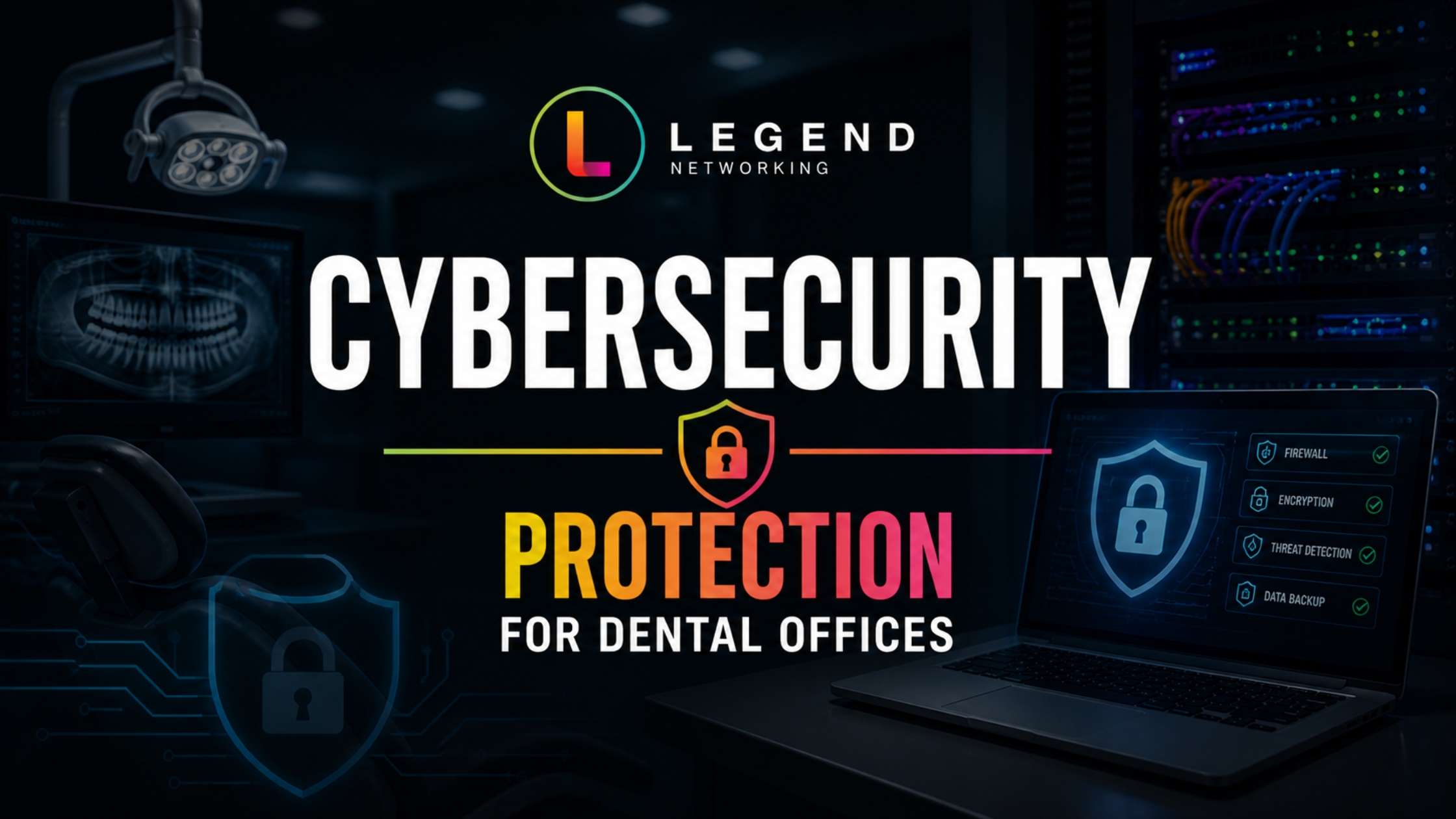 Cyberattacks are common in healthcare organizations because of the information of high value that they hold.
One of the fundamental dental MSP services is a powerful cybersecurity plan. Managed IT providers usually engage in numerous levels of protection that incorporate:
- High-tech antivirus and endpoint protection.
- Network security monitoring and managed firewalls.
- Email security against social engineering.
- Sensitive system, multi-factor authentication.
The continuous monitoring would help to identify suspicious activity before it runs out of hand.
Having the right cybersecurity mechanisms in the dental clinic can ensure that dental clinics operate freely, knowing that the data of their patients is secure.
Managed Backup and Disaster Recovery
Loss of data may be very disruptive to a dental practice. Patient records, imaging files and billing data are very important in day-to-day operations.
This information is protected by having a professional IT management strategy that consists of secure backup and recovery systems.
Backup systems managed can usually include:
- Encrypted backups that are auto-generated.
- Cloud or off-site backup storage.
- Incremental daily backups.
- Quick system recovery services.
With practices that put into place <|human|>secure data backup and recovery services, there would be a lot of minimisation of downtime after the hardware failures or any unforeseen disruption.
Software Updates and System Maintenance
Technology issues are a common occurrence in systems that are either not supported or are out of date.
As a service, dental managed IT systems will guarantee up-to-date and secure software and operating systems.
Routine maintenance activities may involve:
- Operating system updates
- Installation of a security patch.
- Medical administration software modifications.
- Hardware compatibility methods.
Maintaining systems keeps them free of security vulnerabilities and also makes sure that dental software keeps running reliably.
Network Performance Optimisation and Network Monitoring.
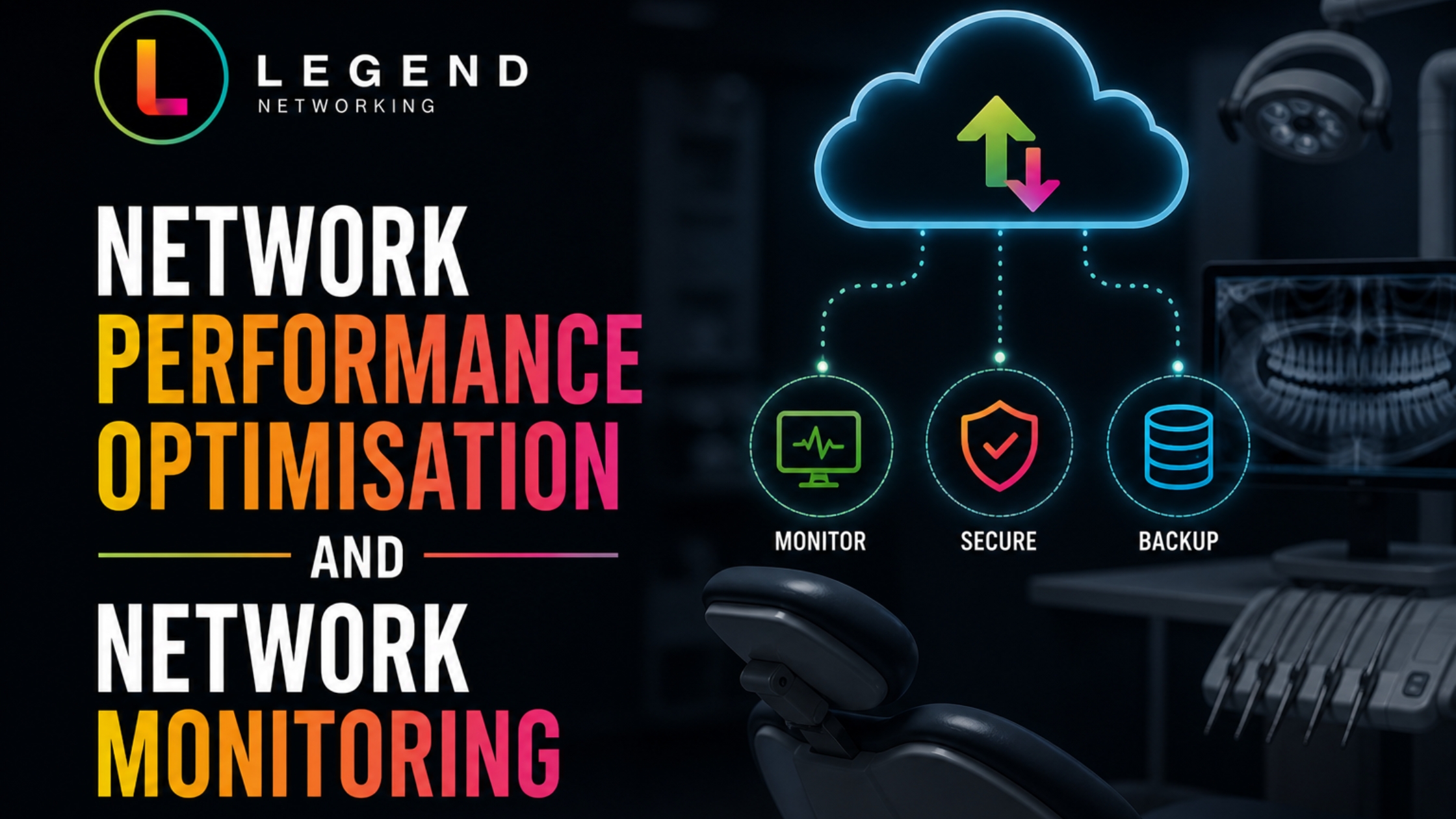
Dental practices are dependent on consistent networks to facilitate imaging systems, practice management systems, and digital communication systems.
IT services that are managed involve active monitoring, where the issues in the networks are spotted, and therefore, they do not disrupt the normal operations of the company.
Services that are normally involved in monitoring include:
- Performance monitoring of the network.
- Server health monitoring
- System warnings on possible failures.
- Distance troubleshooting and assistance.
The clinics which use the services of the dental offices based on an IT provider which is a part of the legendary organization prefer to be on the frontline in managing the system instead of waiting until the problem arises.
Strategic IT Planning for Dental Growth
Technology planning is significant in the success of a dental practice in the long run.
This is because as practices increase, they tend to expand services, open more operatories or, during expansion, additional places are opened. Clinics plan technology upgrades that facilitate this growth with the assistance of managed IT providers.
Strategic planning services can be:
- Infrastructure upgrades
- Cloud migration strategies
- Hardware life cycle management.
- Budgeting and planning of technologies.
The dental practices in need of location-specific help can consider services of the type of dental IT services in Minneapolis, dental office IT services in St. Louis, or IT services in dental clinics in Cleveland.
Building a Reliable Technology Environment for Dental Practices
In the work of any dental clinic, technology is a very important aspect that is used in daily activities.
Trustworthy systems enable dental teams to swiftly get access to patient records, effectively handle imaging and ensure safe communication with patients and employees.
With the introduction of managed it services for dental clinics, clinics may avoid technical failures, enhance data protection, and meet healthcare requirements.
Dental practice specialists like Legend Networking are working on designing, managing and maintaining IT environments that meet the specific needs of dental care.
Technology can be used to benefit dental units, as the time spent troubleshooting broken systems can be spent on providing quality care to patients.
Frequently Asked Questions
Q. What are managed IT services for dental practices?
Ans. Dental practices managed IT services offer continuous monitoring, maintenance, security as well as technical support to dental technology systems.
Q. What are the reasons behind dental clinics utilising dental managed IT services?
Ans. Managed IT services help dental clinics to maintain stable systems, render patient data and ensure that the clinics comply with the healthcare regulations.
Q. What are the contents of dental MSP services?
Ans. The dental MSP services are usually provided with cybersecurity protection, network monitoring, backup management, software updates, and technical support.
Q. What is the impact of IT support of dental offices on workflow?
Ans. Responsible IT implementation will make sure that imaging technology, practice administration software, and communication devices run without issues, and the staff will be able to work effectively.
Q. Why do dental practices need to be concerned about cybersecurity?
Ans. Dental clinics hold sensitive data of patients. The cybersecurity measures ensure that this data is not accessed unlawfully, via malware and ransomware attacks.
Q. What is the frequency of dental IT system observation?
Ans. The monitoring of the dental IT systems must be ongoing to detect possible problems on time and avoid interruptions of patient care.
Q. What is the support that Legend Networking provides to dental practices using managed IT services?
Ans. Legend Networking offers a specialised dental IT service type, which covers network design, data protection through cybersecurity, and data backup systems, as well as continuous monitoring.
Q. Will Legend Networking help dental practices start new branches?
Ans. Yes. Legend Networking assists dental organizations in creating a scaled IT infrastructure that will help with expansion and more clinic locations.
Q. Does Legend Networking offer IT support to dental offices in other cities?
Ans. Yes. Legend Networking is a company that assists the dental practices in various locales by providing location-based services that meet the needs of the local clinics.
Q. What can the dental practices do to determine the suitability of managed IT services to them?
Ans. The dental practices need to consider their technology reliability, security needs, compliance requirements and growth plans in determining whether or not they need managed IT services.




 Based in USA

