

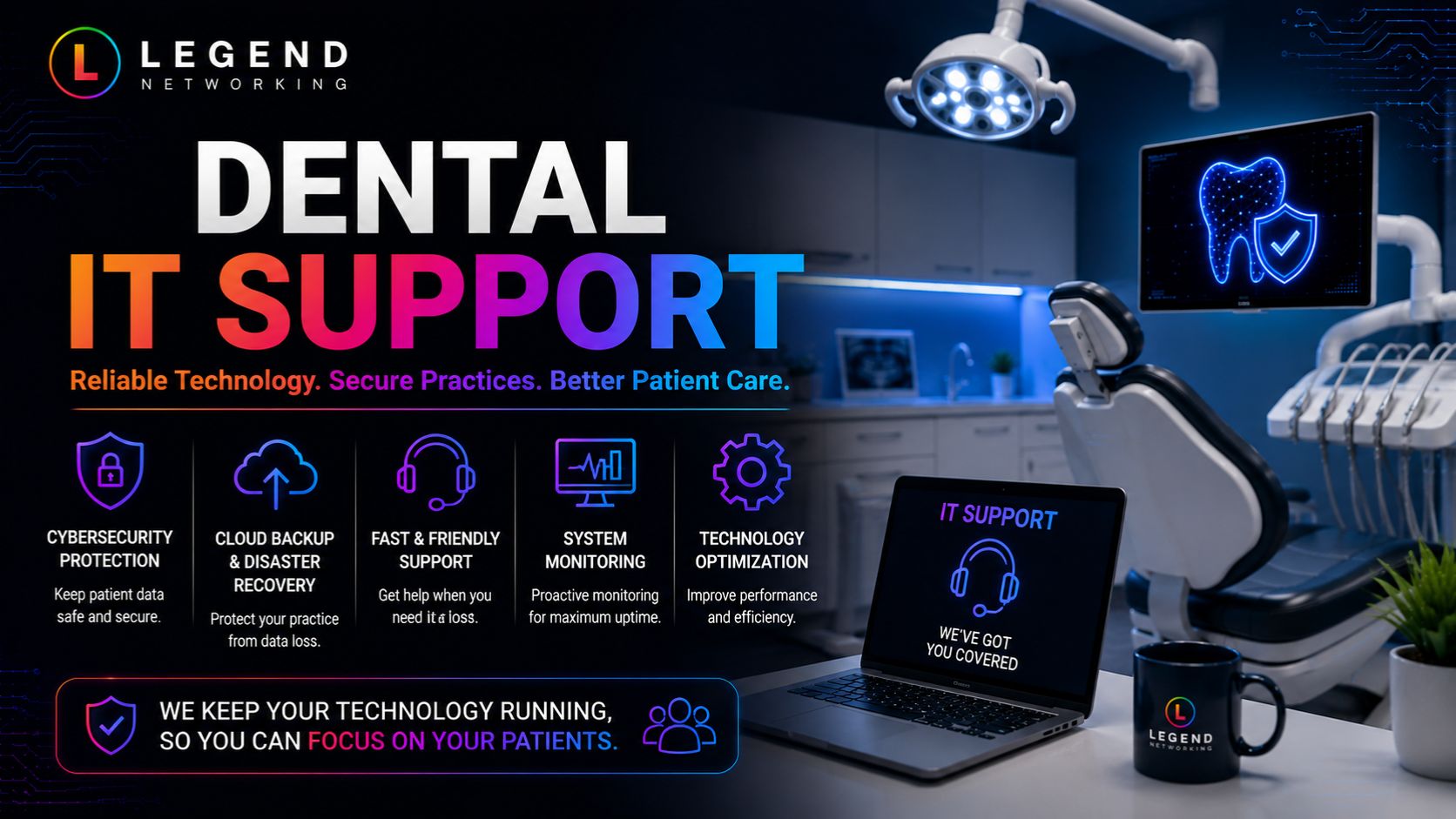
Dental offices need IT support when recurring technology issues begin affecting productivity, patient care, cybersecurity, or HIPAA compliance. Common warning signs include slow computers, software crashes, ransomware concerns, poor backups, unreliable Wi-Fi, outdated systems, and increasing downtime. Because modern dental practices rely heavily on digital imaging, cloud software, patient communication systems, and secure networks, specialized dental IT support is essential for maintaining efficient and compliant operations.
This guide explains the top signs dental office needs IT and how managed IT for dental practices helps reduce risk, improve security, and support long-term growth. If you are already looking for a provider, see our dental office IT support page.
Why Dental Practices Depend on Reliable IT Support
Modern dentistry has embraced digital transformation. Practices now rely on cloud-based software, advanced imaging systems, and secure communication platforms. With rising cybersecurity threats in healthcare and strict HIPAA requirements, downtime or IT failures can directly impact patient care and compliance. Reliable dental office IT services ensure operational uptime, protect sensitive data, and keep workflows efficient.
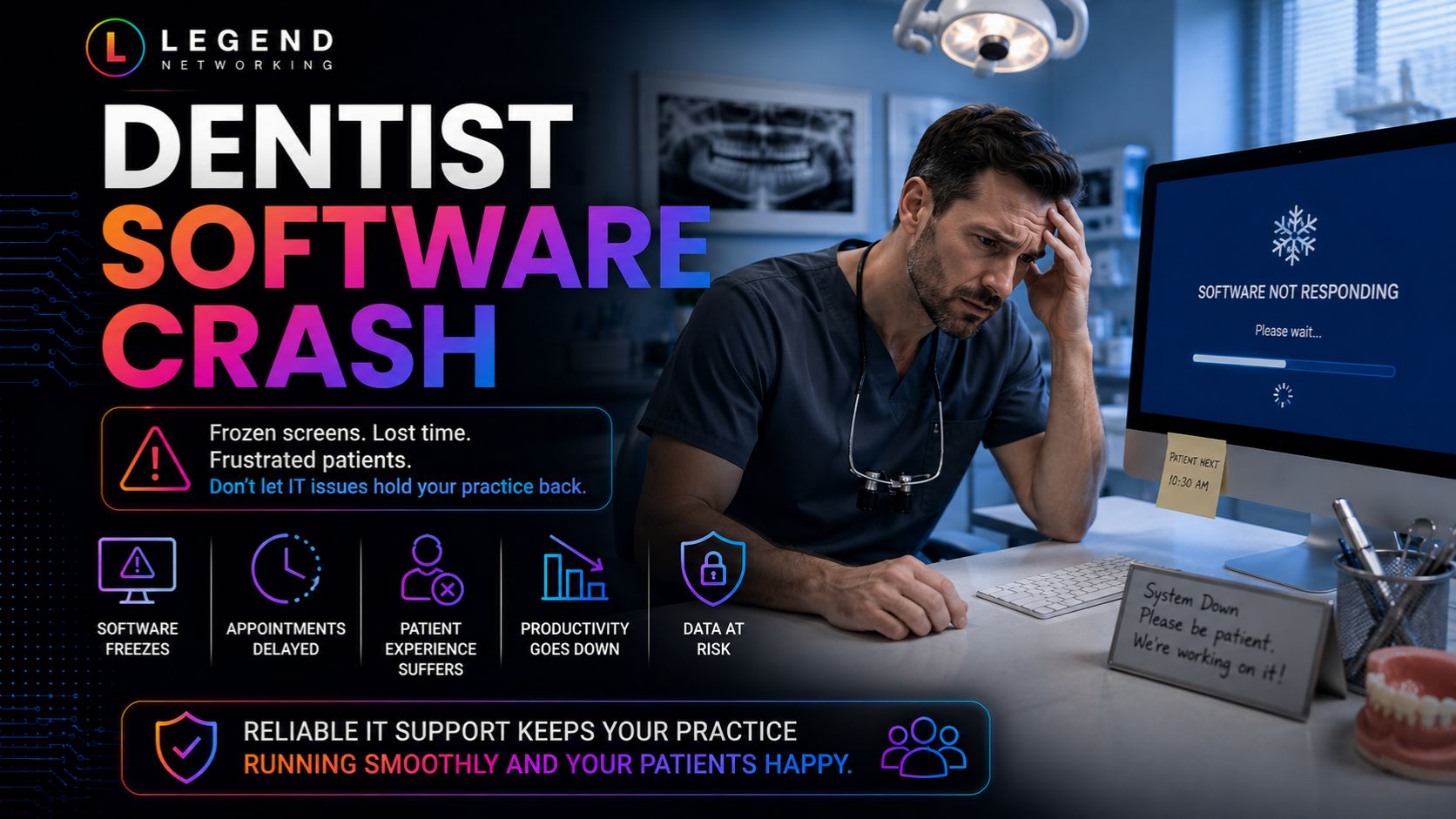
1. Your Dental Software Frequently Crashes
If your practice management software freezes during appointments, it's more than an inconvenience, it disrupts patient care. Outdated systems, server overload, or poor integration can cause repeated crashes. Specialized practice management IT services ensure your scheduling, billing, and charting tools run smoothly.
2. Your Team Constantly Complains About Slow Computers
Aging hardware, insufficient RAM, or network bottlenecks can slow down daily operations. When staff productivity drops, patient experience suffers. Upgrading systems and optimizing performance with managed IT for dental practices keeps workflows fast and reliable.
3. You Don't Have Reliable Data Backups
Losing patient records can be catastrophic. Without secure backups, dental offices risk compliance violations and permanent data loss. According to the National Institute of Standards and Technology's Data Backup Guidelines, practices should implement layered strategies such as local, cloud, and hybrid backups to ensure redundancy and HIPAA compliance.
| Backup Type | Benefits | Risks |
|---|---|---|
| Local Backup | Quick access | Vulnerable to theft/disasters |
| Cloud Backup | Remote protection | Internet dependency |
| Hybrid Backup | Maximum redundancy | Higher management cost |
4. Your Practice Is Vulnerable to Cybersecurity Threats
Dental practices are prime targets for ransomware and phishing attacks because patient data is highly valuable. Weak passwords, outdated firewalls, and lack of multi-factor authentication increase risks. Proactive dental cybersecurity support protects your practice from costly breaches.
5. HIPAA Compliance Feels Confusing or Unmanageable
HIPAA requires strict safeguards for patient data. If compliance audits or secure communication protocols feel overwhelming, it's time to seek expert IT guidance. HIPAA-compliant dental IT ensures your practice avoids fines and maintains patient trust.
6. Your Digital Imaging and Dental Technology Are Unreliable
Lagging digital X-rays or scanners often point to storage or server issues. Optimized IT infrastructure ensures imaging systems run efficiently, supporting accurate diagnostics and patient care.
7. Your Office Wi-Fi and Network Frequently Go Down
Unstable internet disrupts scheduling, billing, and patient communication. Poor network design or outdated routers often cause downtime. Partnering with a dental office network support ensures secure, scalable connectivity.
8. Your Systems and Hardware Are Outdated
Running unsupported software or old servers increases compliance risks. With Windows 10 reaching end-of-life, upgrading systems is critical for security and efficiency.
9. Your Team Doesn't Have Immediate IT Support
When technology fails during patient hours, waiting for help is not an option. Dental MSP services provide 24/7 support, ensuring quick resolutions and minimal disruption.
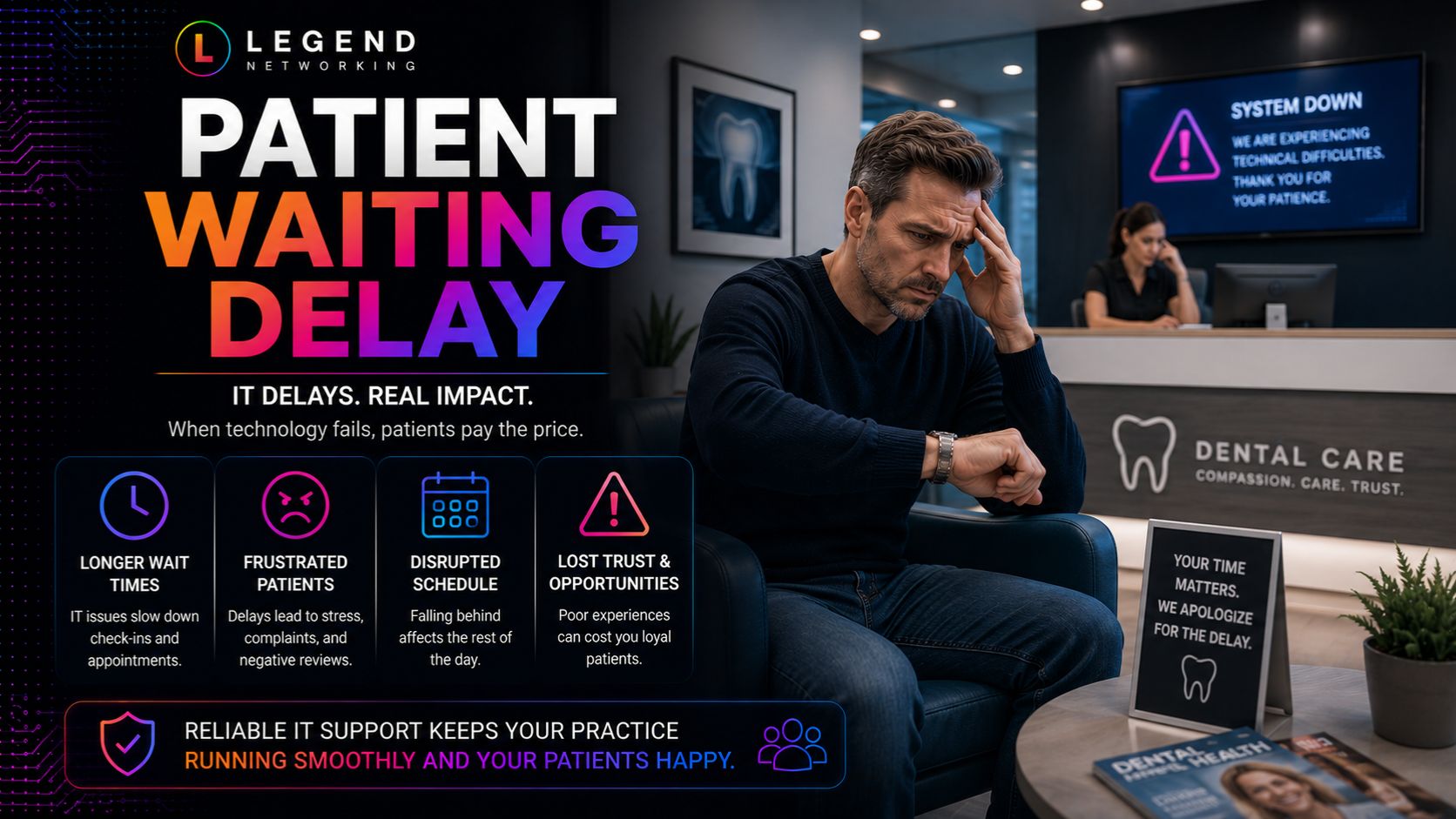
10. Technology Problems Are Affecting Patient Experience
Delayed appointments, communication breakdowns, and scheduling issues erode patient trust. Reliable IT systems directly improve satisfaction and reputation.
Managed IT vs. In-House IT for Dental Practices
| Feature | Managed Dental IT | In-House IT |
|---|---|---|
| Dental Industry Expertise | Specialized | Generalized |
| Cybersecurity Monitoring | 24/7 | Limited |
| Cost Predictability | Fixed monthly | Variable |
| Scalability | Easy | Difficult |
| Compliance Support | Included | Limited |
How Specialized Dental IT Support Improves Practice Operations
Specialized IT services reduce downtime, strengthen compliance, enhance cybersecurity, and streamline workflows.
"Modern dental practices need IT systems that are secure, scalable, and designed specifically for clinical workflows." — Certified Dental IT Professional, Legend Networking
Conclusion
Technology problems in dental offices are no longer minor inconveniences. From cybersecurity threats and compliance risks to software downtime and patient communication failures, poor IT infrastructure can directly impact practice growth and patient trust. Specialized dental IT support helps practices stay secure, efficient, scalable, and compliant. If you're looking for expert dental IT support, visit our Google Business Profile to learn more about our services and see what our clients have to say.
Talk to a Dental IT Specialist
Frequently Asked Questions
Q. What does dental IT support include?
Dental IT support covers software management, hardware upgrades, cybersecurity, HIPAA compliance, and network monitoring.
Q. How much does managed IT support for dental offices cost?
Costs vary depending on practice size, but managed IT typically offers predictable monthly pricing.
Q. Why do dental offices need cybersecurity protection?
Because patient records are highly valuable, dental offices are frequent ransomware targets.
Q. How can dental practices prevent ransomware attacks?
By using multi-factor authentication, email security, and partnering with experts like Legend Networking.
Q. What are the most common dental IT problems?
Slow computers, unreliable backups, outdated systems, and compliance risks.
Q. Should dental offices use cloud backups?
Yes, cloud backups provide secure, HIPAA-compliant redundancy.
Q. How often should dental offices upgrade computers?
Typically every 3–5 years, or sooner if performance impacts patient care.
Q. What is the difference between general IT and dental IT support?
General IT lacks industry-specific expertise, while dental IT providers like Legend Networking specialize in clinical workflows.
Q. Does Legend Networking provide HIPAA compliance support?
Yes, Legend Networking ensures dental practices meet HIPAA technical safeguards and compliance audits.
Q. How does Legend Networking improve patient experience?
By reducing downtime, securing communication systems, and ensuring technology supports smooth appointments.